
Padmanabhaswamy Temple festivals, and the one that comes once in six years
Two great Utsavams run for ten days each, one in October or November and one in March or April. Both end the same way, with the deity carried to the sea at Shanghumugham. Between them sit Navaratri and Lakshadeepam, the rarest event in the calendar. This page covers when each falls, how darshan changes and whether a festival week suits your trip.
Last checked 15 August 2026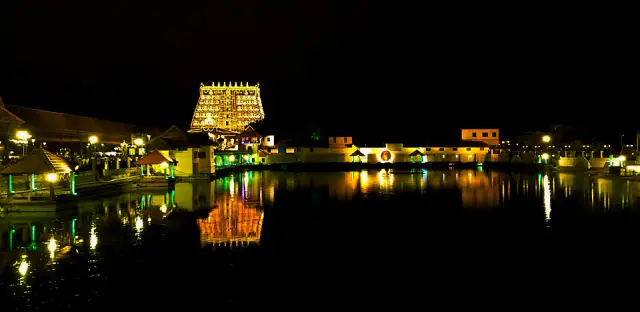
Six events that change how the temple runs
The daily schedule holds for most of the year. These are the occasions when it does not, when the crowd at the gate multiplies and when the rooms in East Fort disappear. Two of them are fixed features of every year, and one comes round only once in six.
Everything here follows the Malayalam calendar
None of these fall on fixed Gregorian dates. They follow the Malayalam calendar, shift each year, and are announced by the temple rather than published far in advance. Check before you build a trip around one.
| Festival and when it falls | Length |
|---|---|
| Alpashy UtsavamThulam, the Malayalam month falling in October or November | Ten days |
| Painkuni UtsavamMeenam, the Malayalam month falling in March or April | Ten days |
| NavaratriKanni or Thulam, falling in September or October | Nine nights |
| LakshadeepamHeld once every six years, after fifty six days of recitation | One night |
| AaratThe final day of each Utsavam, ending after dark | One evening |
| Malayalam new moonEvery month, with heavier crowds than an ordinary day | One day |
Dates move every year with the Malayalam calendar. Confirm with Kerala Tourism or a hotel in Fort before booking around a festival.
Once every six months the deity leaves the temple
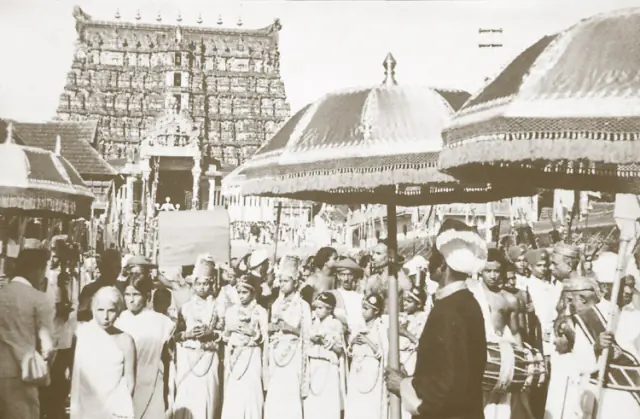
Both Utsavams close with the Aarat. The deity is carried out of the sanctum in procession, through Fort and down to Shanghumugham beach for a ritual immersion in the sea, escorted by the head of the Travancore family on foot.
The procession returns after dark. Roads through Fort close for it, autos will not take you near, and the crowd is the largest the temple sees all year.
A festival week is the best time to see the temple and the worst time to visit it
Both statements are true at the same time, and which one applies depends entirely on why you are going. Someone who came for the procession will remember it for years. Someone who came for a quiet darshan on a tight schedule will not.
Go during a festival if
- You want to see the temple at its most alive, with day and night poojas running
- You would travel for the Aarat procession alone, which is worth the crowd
- You are in Kerala anyway and the dates happen to line up
- You are staying far from Fort and do not mind a long queue
Avoid it if
- You have one morning in the city and cannot risk the timings changing
- You are travelling with small children or anyone who cannot stand for an hour
- You want the 8:30 AM slot, which loses its usual advantage in festival weeks
- You have not booked a room, since East Fort sells out entirely
What a festival week actually looks like
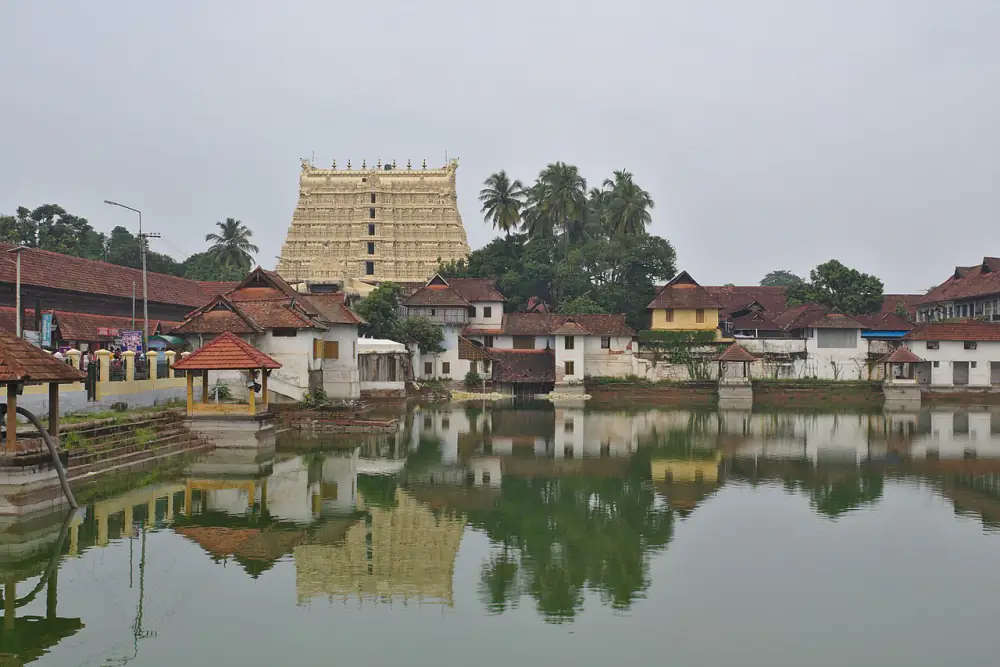
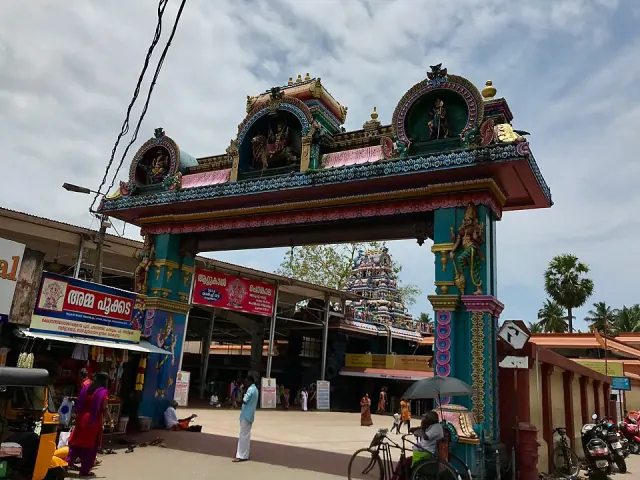
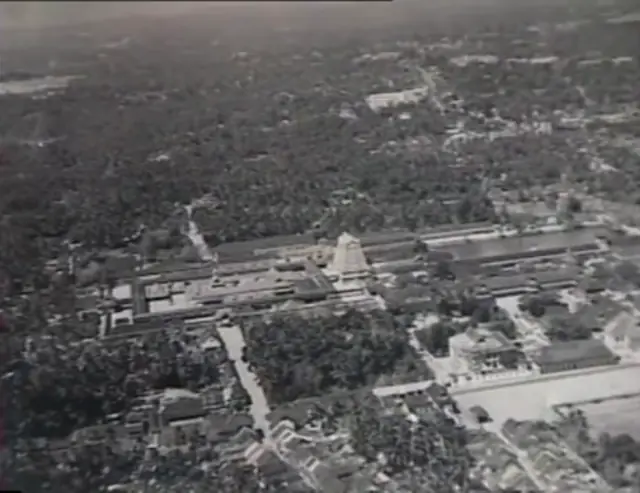
Nothing may be photographed inside the temple at any time, so what survives is the outside: the gate, the gopuram and the lamps. These images are in the public domain or freely licensed.
Four festivals, and the year arranges itself around two
If your dates are flexible, this is the shape of the calendar. Two ten day peaks half a year apart, one music festival in autumn, and one night every six years that people plan trips around.
What changes during an Utsavam
- The temple runs a festival schedule instead of the daily one, and darshan windows shorten.
- Processions take over parts of the day, closing roads through Fort without much notice.
- Queues run past an hour even in slots that are usually quiet.
Booking for festival weeks
- East Fort lodges sell out first, then Thampanoor. Several weeks ahead is the minimum.
- Rates rise across Fort, and the cheapest rooms disappear before anything else.
- A Lakshadeepam year fills the city for a single night, which is harder still.
If you want a quiet darshan
Avoid both Utsavam weeks, Navaratri evenings and the Malayalam new moon. That still leaves most of the year open, and the 8:30 AM weekday slot outside those periods is as quiet as this temple gets.
October to February is the most comfortable weather for standing in an open queue, so the gap between the two Utsavams is the sweet spot.
Navaratri in practice
- The music runs at the Navaratri Mandapam across nine evenings and is open to listen to.
- Regular darshan continues throughout, so the daily timings table still applies.
- Evenings are busier than usual but nothing like an Utsavam week, which makes it a reasonable compromise.
Lakshadeepam years
- The build up runs fifty six days, with continuous Vedic recitation inside the temple.
- The lamps are lit on a single night at the end, and the city fills for it.
- Because it comes once in six years, accommodation anywhere near Fort needs booking months rather than weeks ahead.
Watching the Aarat
The procession route runs from the temple through Fort to Shanghumugham beach. You do not need to be inside the temple to see it, and you cannot photograph anything within the complex anyway.
Position yourself along the route rather than at the gate, and expect roads to close well before the procession reaches you.
Padmanabhaswamy Temple festivals, answered
Ten questions on when each festival falls, what the Aarat involves, how darshan changes and whether a festival week suits your trip.
What are the main festivals at Padmanabhaswamy Temple?
Two ten day Utsavams dominate the year. Alpashy falls in October or November and Painkuni in March or April. Both open with the temple flag being raised and close with the Aarat, a procession that carries the deity to the sea at Shanghumugham. Navaratri and Lakshadeepam are the other major events.
What is Lakshadeepam?
Lakshadeepam means one hundred thousand lamps. It is held once every six years, after fifty six days of continuous Vedic recitation, and ends with the entire temple lit by oil lamps on a single night. It is the rarest and most photographed event in the temple calendar.
What is the Aarat procession?
The Aarat closes both Utsavams. The deity is carried in procession from the temple to Shanghumugham beach for a ritual immersion, escorted by the head of the Travancore family, and returns after dark. Roads through Fort close and the crowds are the largest of the year.
Do darshan timings change during festivals?
Yes. During both Utsavams the temple runs a festival schedule rather than the daily one. Darshan windows shorten, processions take over parts of the day, and the ordinary table of slots stops applying. Confirm locally if your visit falls in a festival week.
When is Alpashy Utsavam?
It falls in the Malayalam month of Thulam, which lands in October or November. The exact dates shift each year with the Malayalam calendar and are announced by the temple rather than fixed to Gregorian dates.
When is Painkuni Utsavam?
In the Malayalam month of Meenam, which falls in March or April. Like Alpashy it runs for ten days and ends with the Aarat to Shanghumugham beach.
What happens during Navaratri here?
Classical musicians perform at the Navaratri Mandapam across nine nights, a tradition the Travancore court began in the nineteenth century. Regular darshan continues through the period but evenings are considerably busier than usual.
Is it a good idea to visit during a festival?
It depends on what you want. The temple is at its most alive and the processions are extraordinary. But queues run past an hour, timings change without much notice, and rooms near the gate sell out. For a quiet darshan, avoid these weeks.
Can I photograph the Aarat procession?
The procession moves through public roads, so photography outside the temple is possible. Nothing inside the temple may be photographed at any time, and phones still go to the cloakroom before entry.
How far ahead should I book for a festival?
Several weeks for anywhere near the gate, and longer for a Lakshadeepam year. East Fort lodges fill first, then Thampanoor. Rates across Fort rise noticeably in both Utsavam weeks.
Check the dates before you book anything
A festival week changes the darshan timings, the size of the crowd and the price of every room near the gate. All three are worth knowing before you commit to dates.
Temple Timings
The daily schedule, and how festival weeks change it.
Read the guideHotels Nearby
Where to stay, and why East Fort sells out in festival weeks.
Read the guideTemple History
The 1750 Thrippadidanam and the Travancore kings.
Read the guideHow to Reach
Station, airport and autos, and what closes during processions.
Read the guideTwo Utsavams a year, and one night in six
If your dates are flexible, the quiet months between them give you the same temple without the queue.