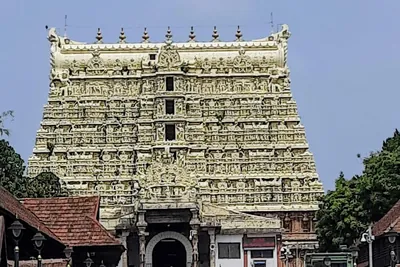
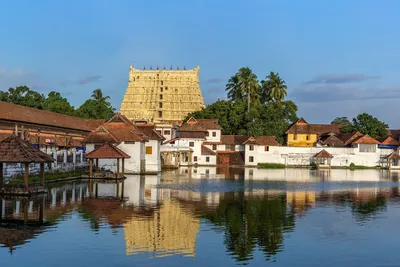
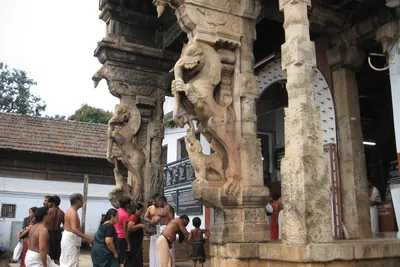
Nirmalya Darshanam at 3:30 AM, and whether it is worth the alarm
The temple opens at 3:30 in the morning, and the first darshan of the day is a different thing from every other slot. The deity has not been bathed or re-dressed. He is still wearing the flowers, tulsi and ornaments from the previous night's final ritual, and that is precisely what devotees come to see. This page covers what Nirmalya Darshanam actually is, what it costs, what time you genuinely need to leave your hotel, and who should not bother.
The short answer
Nirmalya Darshanam is the 3:30 AM first darshan, when the deity is seen still adorned with the previous night's flowers and ornaments, before the day's first bath. It runs until about 4:45 AM, when the sanctum closes for Abhishekam. It is ticketed separately from free general darshan, and tickets are bought at a counter on site, never online. Be at the East Fort entrance by 3:00 AM to clear the dress check and the cloakroom in time.
What nirmalya means, and why it is a separate darshan
Nirmalya refers to the flowers, garlands, tulsi and ornaments that were offered to the deity and have remained on him overnight. In Vaishnava practice these are not spent material. Having rested on the Lord they carry his grace, and seeing him still wearing them is considered a particularly auspicious moment.
Every other darshan slot in the day shows you a deity who has been bathed, re-dressed and freshly decorated for that session. Nirmalya Darshanam is the only slot that shows you the previous day's worship still in place.
Shortly after it ends the sanctum closes and the removal happens: the old flowers come off, the ritual bath is performed, and the deity is dressed again for the morning. Once those doors shut at about 4:45 AM the moment is gone until the following morning.
The same logic applies at Ananthashayanam shrines and Vaishnava temples across the south, but the scale here, and the fact that the deity is a figure of 12,008 salagramams seen through three doors, makes it a particular draw.
The exact schedule on a Nirmalya morning
The morning runs to a fixed programme, and knowing it prevents the most common mistake, which is arriving at 5:00 AM and finding the doors shut.
- 3:30 AM — doors open. Nirmalya Darshanam begins.
- 4:45 AM — sanctum closes for Abhishekam, the ritual bath.
- 6:30 AM — reopens for a short window.
- 7:00 AM — closes again for Usha Pooja.
- 8:30 AM to 10:00 AM — the longest continuous window of the day.
- 11:30 AM to 12:00 PM — the last morning slot.
- 12:00 PM to 5:00 PM — the temple is shut completely.
So the gap between the end of Nirmalya and the next opening is an hour and forty-five minutes. That is the single most important number on this page for planning purposes, and the full day is set out on the timings page.
Treat the published times as the framework rather than a guarantee. Ritual timings shift a little, and during the two ten-day Utsavams the schedule changes entirely.
The ticket, and where you actually buy it
General darshan at this temple is free, all day, with no ticket at all. Nirmalya Darshanam is one of the exceptions: it is ticketed separately, and you buy it at a counter inside the complex.
Three things to know about that.
- Nothing is sold online. No website, app or agent can sell you a Nirmalya ticket, a special entry ticket or any other temple ticket. Any site claiming otherwise is not selling you what it says it is. This is covered in detail on the tickets page.
- Carry cash. The counters work in cash. Do not plan on cards or UPI.
- Buy on arrival, not the day before. The counter operates for that morning's darshan.
Special entry darshan, at about ₹150, is a different product: it buys a shorter queue into the same sanctum during ordinary slots. The two are not interchangeable, and buying one does not get you the other.
What time you genuinely need to leave
Work backwards from 3:30 AM and the arithmetic is unforgiving.
- Be at the East Fort entrance by 3:00 AM. That is the target, not a suggestion.
- Dress check comes first. Men need a mundu with the chest bare, women a saree or set-mundu. If you are renting a mundu outside, add time and note that the rental stalls may not be open at that hour, so sort clothing the previous evening.
- Cloakroom next. Phones, cameras, bags and footwear are deposited. There is a queue for this even at three in the morning.
- Ticket counter, in cash.
- Then the darshan queue.
If you are staying in Fort or East Fort, walking is realistic and simplest. From anywhere further, pre-book a taxi the night before with the driver's number saved. Autos are scarce at 2:30 AM, and app-based cabs are unreliable at that hour in Thiruvananthapuram.
Staying within walking distance is the single biggest thing that makes this slot easy. Our hotels nearby page lists what is actually close to the gate.
What it is actually like at that hour
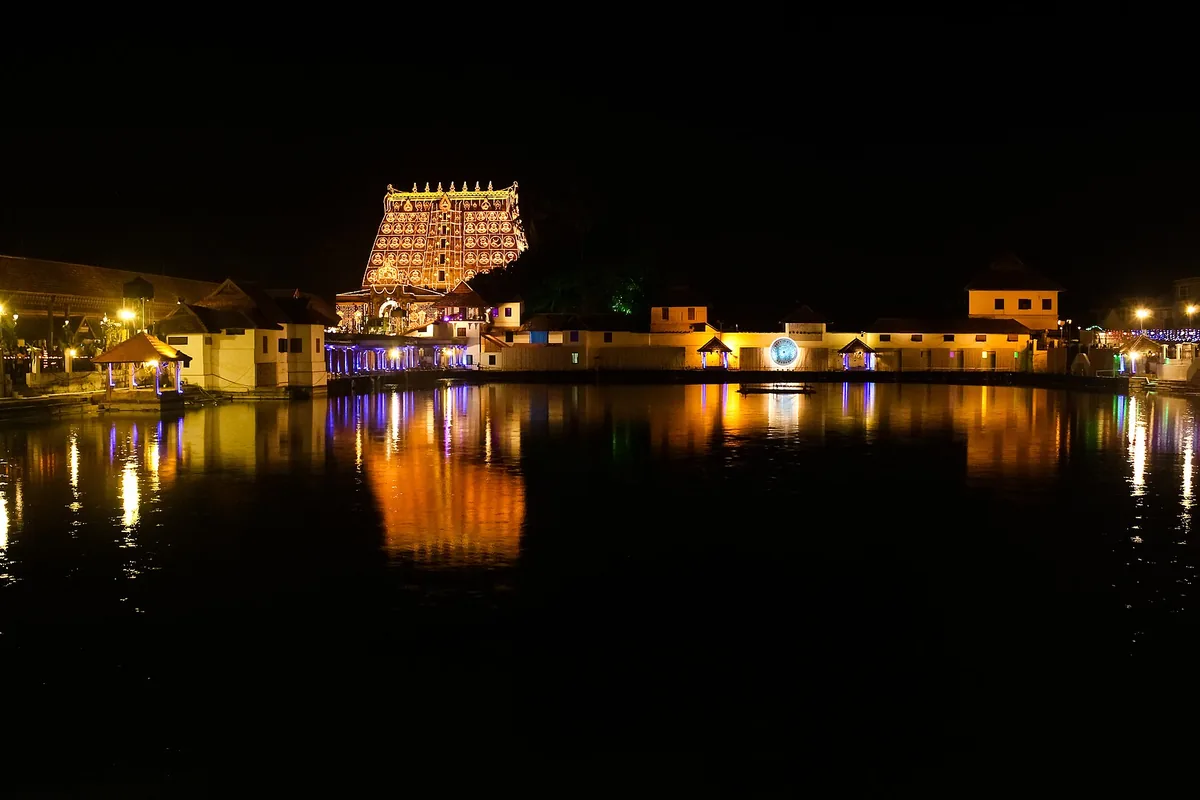
It is dark, it is quiet, and the complex feels completely unlike its daytime self. The lighting inside the sanctum is oil lamps rather than electric fittings, so the darshan is genuinely a lamplit one in a way the 11:30 AM slot is not.
Give your eyes time. Coming in from the lit street into the corridor, most people reach the first door before their vision has adjusted and see far less than they could have. Slow your breathing on the walk in and look at the floor rather than the lamps.
The queue moves at the same pace as any other slot. You get seconds at each of the three doors, not minutes, so decide in advance what you want to look at: the hand over the Shiva lingam at the first, Brahma on the lotus at the second, the goddesses at the feet at the third.
The air is cool, which after a Kerala afternoon is its own argument for the early slot. Expect to be out by around 4:45 AM with the whole morning ahead of you.
How busy the 3:30 AM slot actually is
Nirmalya Darshanam is not empty. The idea that a 3:30 AM start means you will have the temple to yourself is wrong, because the slot has a devoted following among local devotees who do it regularly.
What is true is that it is less crowded than the evening, and dramatically less crowded than a weekend 5:00 PM session, which can mean an hour or more of queueing. On an ordinary weekday morning you can reasonably expect to be through in well under an hour.
The variables that change this are the same ones that change everything else here. Weekends roughly double the crowd. Kerala public holidays do the same. During Painkuni and Alpashy Utsavam the schedule itself changes and comparisons stop being useful.
If your priority is the quietest possible darshan rather than the nirmalya specifically, the 8:30 to 10:00 AM weekday window is the better answer. It is ninety minutes long, it sits between the early rush and the midday crowd, and it costs nothing.
Who should do this, and who should skip it
Do it if you are a devotee for whom seeing the deity in the previous night's adornment carries specific religious meaning; if you are staying in Fort or East Fort and the logistics are trivial; if you have more than one day in the city so a broken night does not cost you your whole trip; or if the lamplit atmosphere is genuinely what you have come for.
Skip it if you are on a single-day visit and would be trading the rest of your day for it; if you are travelling with young children or elderly parents for whom a 2:30 AM start is a real strain; if you are staying far out and would be gambling on transport; or if you have not sorted clothing in advance, because the rental stalls cannot be relied on at that hour.
The honest summary: it is a meaningful darshan and a genuinely atmospheric one, but it is not the difference between a good visit and a bad one. A well-timed 8:30 AM weekday darshan gives you more time in front of the deity, costs nothing and does not cost you a night's sleep.
Fitting it into the rest of your day
An early finish is the practical argument for this slot. You are out by about 4:45 AM with the entire day intact, and here is a sequence that works.
- 4:45 to 6:30 AM. Go back and sleep, or get coffee and breakfast in Fort. Do not wait at the temple; the gap is nearly two hours.
- Late morning. The Kuthiramalika Palace Museum beside the temple, which holds Travancore royal collections and is open to everyone.
- Midday. The temple is shut from 12:00 to 5:00 PM. Use it for lunch and the Napier Museum.
- Afternoon. Kovalam beach is about forty-five minutes away and works well in the closed window.
Our places to visit guide covers all of these with distances, and the first-time visitor guide sets out a complete day plan built around the five-hour closure.
Key points to remember
- Nirmalya Darshanam runs 3:30 AM to about 4:45 AM, showing the deity still in the previous night's flowers.
- It is ticketed separately and sold only at a counter on site. Nothing is available online.
- Be at the East Fort entrance by 3:00 AM to clear the dress check, cloakroom and ticket counter.
- Sort clothing the previous evening. Rental stalls outside cannot be relied on at three in the morning.
- After it closes the next opening is 6:30 AM, a gap of nearly two hours. Do not wait at the gate.
- It is quieter than the evening but not empty. For the quietest darshan, the 8:30 to 10:00 AM weekday window is better.
- Skip it on a single-day trip, or if you are staying far from Fort and would be gambling on transport.
Sources and further reading
Nirmalya Darshanam, answered
Ten questions on the 3:30 AM slot, the ticket, arrival timings and whether it is worth it.
What is Nirmalya Darshanam at Padmanabhaswamy Temple?
It is the first darshan of the day, at 3:30 AM, when the deity is seen still wearing the flowers, tulsi and ornaments offered the previous night, before the day's ritual bath. It is the only slot that shows the previous day's worship still in place.
What time is Nirmalya Darshanam and how long does it last?
It begins at 3:30 AM and runs until about 4:45 AM, when the sanctum closes for Abhishekam. The next opening after that is 6:30 AM, so there is a gap of nearly two hours.
Is Nirmalya Darshanam free?
No. General darshan at this temple is free all day, but Nirmalya Darshanam is ticketed separately. Tickets are bought in cash at a counter inside the complex on the morning itself.
Can I book Nirmalya Darshanam online?
No. No website, app or agent can sell you any Padmanabhaswamy Temple ticket, including this one. Every ticket is sold at a counter on site and paid for in cash. Any site claiming to sell you one is not selling what it says.
What time should I reach the temple for Nirmalya Darshanam?
Be at the East Fort entrance by 3:00 AM. You need time for the dress check, the cloakroom where phones and bags are deposited, and the ticket counter before the doors open at 3:30 AM.
Is Nirmalya Darshanam crowded?
It is not empty. The slot has a committed following among local devotees. It is markedly quieter than a weekend evening, and on an ordinary weekday you can expect to be through in well under an hour, but do not expect to have the temple to yourself.
What should I wear for Nirmalya Darshanam?
The same dress code as any other slot, and it is enforced. Men wear a mundu with the chest bare, women a saree or set-mundu. Arrange this the previous evening, because the rental stalls outside the temple cannot be relied on at three in the morning.
Can I take photos during Nirmalya Darshanam?
No. Phones and cameras are deposited at the cloakroom before entry and there is no permit for photographing the deity at any hour. Photograph the exterior and the tank before you join the queue.
Is Nirmalya Darshanam worth waking up for?
It is if the religious significance matters to you, if you are staying within walking distance of the gate, or if the lamplit early atmosphere is what you have come for. Skip it on a single-day trip, with young children or elderly travellers, or if you are staying far out and would be gambling on transport at 2:30 AM.
Which is the least crowded darshan slot overall?
The 8:30 AM to 10:00 AM window on a weekday. It is the longest continuous slot in the schedule at ninety minutes, it sits after the early rush and before the midday visitors, and it costs nothing at all.