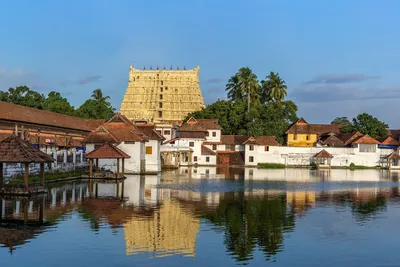
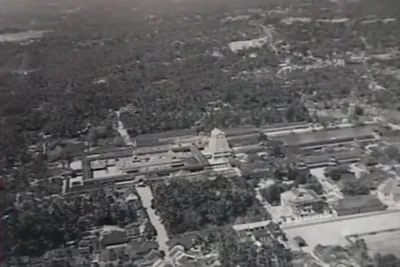
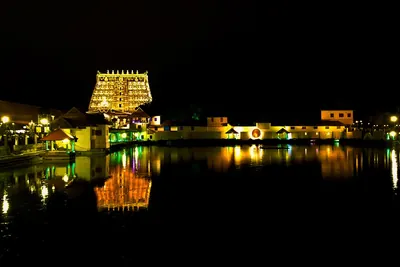
Painkuni Utsavam, from the flag to the sea
Twice a year the daily schedule at Padmanabhaswamy stops applying. Painkuni Utsavam is the spring one, ten days in the Malayalam month of Meenam that fall in March or April, and it ends the way the temple's festivals always end: with the deity carried out of the complex and down to the sea. This covers what happens on which day, how darshan changes, and the honest case for and against timing your visit around it.
The short answer
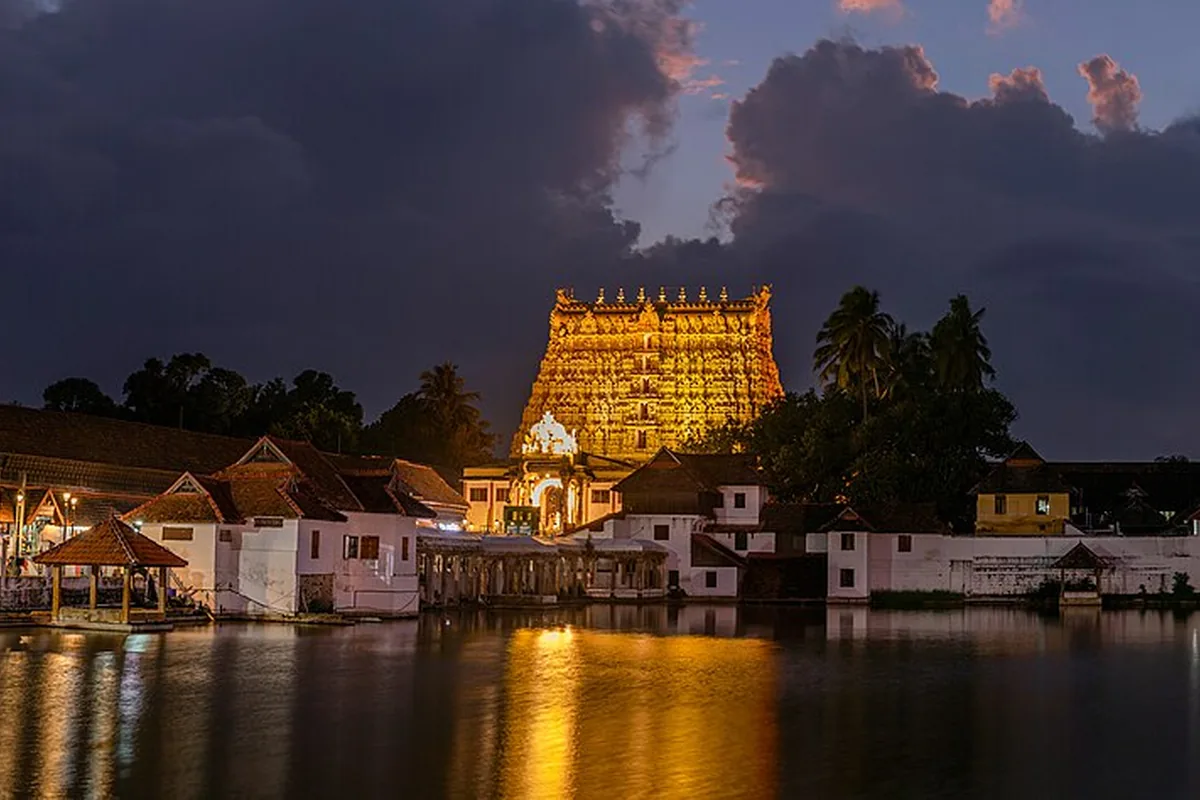
Painkuni Utsavam is a ten-day festival in March or April, one of the temple's two great annual Utsavams. It opens with the ceremonial raising of the temple flag and closes with the Aarat, a procession that carries the processional deities from the temple to Shanghumugham beach for a ritual immersion, returning after dark by torchlight. Darshan windows shorten through the festival and crowds increase sharply, so plan for atmosphere rather than for a quiet darshan.
When Painkuni falls, and why the date moves
Painkuni Utsavam runs for ten days in the Malayalam month of Meenam, which corresponds to March or April in the Gregorian calendar. The dates move each year because they are fixed by the Malayalam calendar and by the position of the Painkuni asterism, not by a fixed western date.
This matters if you are booking travel. Do not assume last year's dates. The temple announces the schedule ahead of the festival, and local news in Thiruvananthapuram carries it well in advance.
Painkuni is one of two great Utsavams in the year. The other is Alpashy Utsavam, also ten days, falling in October or November. They run to a broadly similar shape and both end with the Aarat at the sea. Between them sit Navaratri and, once in every six years, Lakshadeepam, the rarest event in the calendar.
Our festivals page carries the full year and how each event changes the temple's working schedule.
The flag that starts the festival
The festival opens with Kodiyettu, the ceremonial hoisting of the temple flag on the flagstaff before the sanctum. Until that flag goes up the temple is running its ordinary daily programme; from the moment it does, the festival schedule takes over.
The flag-raising is a formal ritual attended by the temple's priesthood and, by long tradition, by the head of the former Travancore royal family in the capacity of Padmanabhadasa, servant of Padmanabha. That title comes from the Thrippadidanam of 1750 and the family's ceremonial role in the festival is a direct continuation of it.
For a visitor, day one is a good day to be in the complex if you want to see the temple change gear, but it is not the day with the most to look at. The visual peak of the festival is at the other end, on the day of the Aarat.
The flag comes down at the close of the festival, after the Aarat party returns.
What happens across the ten days
The festival is a sustained ritual programme rather than a series of separate events, and much of it takes place inside the sanctum, out of public view. What a visitor experiences is the change in atmosphere, in decoration and in the daily rhythm.
- Special poojas each day, additional to the ordinary schedule, which is the main reason the darshan windows compress.
- Richer alankaram. The deity is dressed more elaborately than on ordinary days, and the gold ornamentation described on our idol page is more likely to be in use.
- Processions of the utsava murti, the metal processional image, within and around the complex on specific days.
- Traditional performance in and around the temple, including the classical arts that the Travancore court patronised.
- Larger crowds building steadily towards the final days.
If you have one day and want the fullest experience, take the last. If you want a quieter festival visit with the decoration but not the crush, take one of the middle days.
The Aarat, and the walk to Shanghumugham
The Aarat is the closing act and the reason people travel for this festival. On the final day the processional deities are carried out of the temple and taken in procession roughly to Shanghumugham beach, about eight kilometres west of the temple, for a ritual immersion in the sea.
The procession is a formal one, accompanied by caparisoned elephants, traditional percussion and a large body of devotees. The head of the former royal family walks with it, on foot, in a role that has been performed by the family for generations.
The immersion takes place at the beach and the party returns to the temple after dark, escorted by torches. The return leg through the city at night is, for many people, the most striking part of the whole thing.
Both of the temple's great Utsavams close this way. If you cannot make Painkuni, the Alpashy Aarat in October or November is the same ceremony.
How darshan timings change during the festival
This is the part visitors underestimate. The ordinary daily schedule does not hold during the Utsavam. The temple runs a festival programme instead, and the effect on a visitor is consistent in direction even though the specifics vary by day.
- Darshan windows shorten. Additional rituals take up time that would otherwise be open darshan.
- Processions close parts of the complex at intervals through the day.
- The Aarat day is the most disrupted of all, with the procession taking over the afternoon and evening entirely.
What does not change is the five-hour midday closure and the dress code, both of which apply exactly as usual. Check the ordinary framework on the timings page, then treat festival days as a variation on it rather than a replacement.
The practical instruction: on a festival day, go early. The morning slots are the ones most likely to run close to normal.
Crowds, rooms and what the festival actually costs you
Festival weeks are the busiest time of the year at this temple, and the effects run beyond the queue.
- Queues lengthen substantially, particularly in the evening and in the final days.
- Rooms in Fort and East Fort disappear. The accommodation closest to the temple books out well ahead. See hotels nearby and book early rather than on arrival.
- Roads around East Fort and on the route to Shanghumugham close or congest on Aarat day. Plan to walk rather than to be driven.
- Parking, already limited, becomes impractical.
Special entry darshan at about ₹150 is worth considering during a festival week specifically, because the difference between the free queue and the paid one is at its largest when the temple is at its busiest. It is still cash only and still bought on site: see the tickets page.
Where to stand for the Aarat
You do not need to be inside the temple to see the best of the Aarat, which is useful given the entry restriction.
- Outside the East Fort gate, as the procession leaves. Good for the elephants and the formal start.
- Along the route through the city. Less crowded than either end and you get a longer look as it passes.
- Shanghumugham beach, for the immersion itself. Busiest, and you will need to arrive well before the procession does.
- The return leg after dark, which is torchlit and, for many people, the most memorable stretch.
Because the procession takes place outside the temple, non-Hindu visitors can watch it, and the dress code does not apply on the street. This makes Aarat day one of the few occasions when a visitor who cannot enter the temple can still see something central to its religious life. Photography outside the complex is not restricted the way it is inside.
Should you plan a trip around Painkuni?
Plan around it if you want to see the temple at its most alive, if the procession and the Aarat are the draw, if you can be in the city for the final two days, or if you cannot enter the temple and want to see something significant anyway.
Do not plan around it if your priority is a calm darshan with time in front of the deity. On that measure a festival week is the worst time of year, not the best. An ordinary weekday morning in the 8:30 to 10:00 AM window will give you more.
There is a middle path that most visitors do not consider: come during the festival but do your darshan on one of the earlier days, in the morning, and stay on for the Aarat at the end. You get the decoration and the atmosphere without doing your temple visit on the single most congested day.
If you are building a whole itinerary, the first-time visitor guide sets out a day that works around the five-hour closure, festival or not.
Key points to remember
- Painkuni Utsavam runs ten days in March or April; dates follow the Malayalam calendar and move each year.
- It opens with the raising of the temple flag and closes with the Aarat procession to Shanghumugham beach.
- Alpashy Utsavam in October or November is the same shape and ends with the same ceremony.
- Darshan windows shorten through the festival and the Aarat day is the most disrupted. Go early on festival days.
- Rooms near the temple book out well ahead, and roads around East Fort congest on the final day.
- The procession happens outside the temple, so non-Hindu visitors can watch it and photography is unrestricted there.
- For a calm darshan, a festival week is the worst time of year. Come for atmosphere, not for time at the sanctum.
Sources and further reading
Painkuni Utsavam, answered
Ten questions on dates, the Aarat, crowds and whether a festival week suits your trip.
When is Painkuni Utsavam held?
It runs for ten days in the Malayalam month of Meenam, which falls in March or April. The dates move each year because they follow the Malayalam calendar rather than a fixed Gregorian date, so check the announced schedule rather than assuming last year's dates.
What is the Aarat at Padmanabhaswamy Temple?
The Aarat is the closing procession of each great Utsavam. The processional deities are carried from the temple to Shanghumugham beach, roughly eight kilometres west, for a ritual immersion in the sea, returning to the temple after dark by torchlight.
How long does Painkuni Utsavam last?
Ten days. It begins with the ceremonial raising of the temple flag, known as Kodiyettu, and ends with the Aarat and the lowering of the flag after the procession returns.
What is the difference between Painkuni and Alpashy Utsavam?
They are the temple's two great annual festivals and they run to a broadly similar ten-day shape, both closing with the Aarat to Shanghumugham. Painkuni falls in March or April, Alpashy in October or November.
Do temple timings change during Painkuni?
Yes. The ordinary daily schedule does not hold during an Utsavam. Additional rituals shorten the darshan windows and processions close parts of the complex at intervals. The Aarat day is the most disrupted. Morning slots run closest to normal, so go early.
Can non-Hindus watch the Aarat procession?
Yes. The procession takes place outside the temple, on the streets and at the beach, so anyone can watch it regardless of faith. The temple dress code does not apply on the street and photography outside the complex is not restricted the way it is inside.
Is Painkuni a good time to visit Padmanabhaswamy Temple?
It depends what you want. For atmosphere, decoration and the procession, it is the best time of year. For a calm darshan with time in front of the deity, it is the worst, because queues lengthen sharply and darshan windows shorten.
How crowded does the temple get during the festival?
Substantially more crowded than usual, building towards the final days. Rooms in Fort and East Fort book out well ahead, parking becomes impractical, and roads around East Fort and on the route to Shanghumugham congest or close on Aarat day.
Where is the best place to watch the Aarat?
Outside the East Fort gate as the procession leaves gives you the elephants and the formal start. Points along the route through the city are less crowded and give you a longer look. Shanghumugham beach is busiest. The torchlit return after dark is the most memorable stretch for many people.
Should I buy special entry darshan during a festival?
It is worth considering during a festival week specifically, because the gap between the free queue and the paid one is at its largest when the temple is busiest. Special entry costs about ₹150, is bought in cash at a counter on site, and is never sold online.