Padmanabhaswamy Temple rules, and what actually gets you stopped
This temple turns people away every single day, and almost never for anything dramatic. It is trousers, a phone in a pocket, a leather belt, a camera bag. The rules here are stricter than at most major temples in India and they are enforced before you get anywhere near the sanctum, by staff whose decision is final. This is the complete list, in the order you will meet each one.
The short answer
The rules that stop people, in order of how often: dress (men need a mundu with the chest bare, women a saree or set-mundu; trousers and shirts are always refused), phones and cameras (deposited at the cloakroom, no exceptions and no permit), footwear and bags (both left outside), and entry restricted to Hindus. Leather items and outside food are also refused. Everything except clothing can be solved at the cloakroom; clothing cannot.
Dress, which is where almost everybody fails
This is the strictest dress code of any major temple in Kerala, it applies to every visitor without exception, and it is checked before you join any queue.
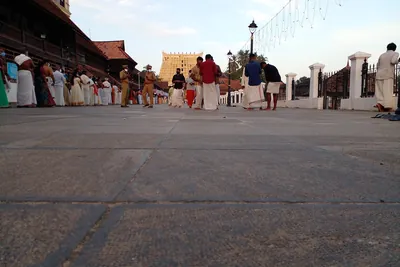
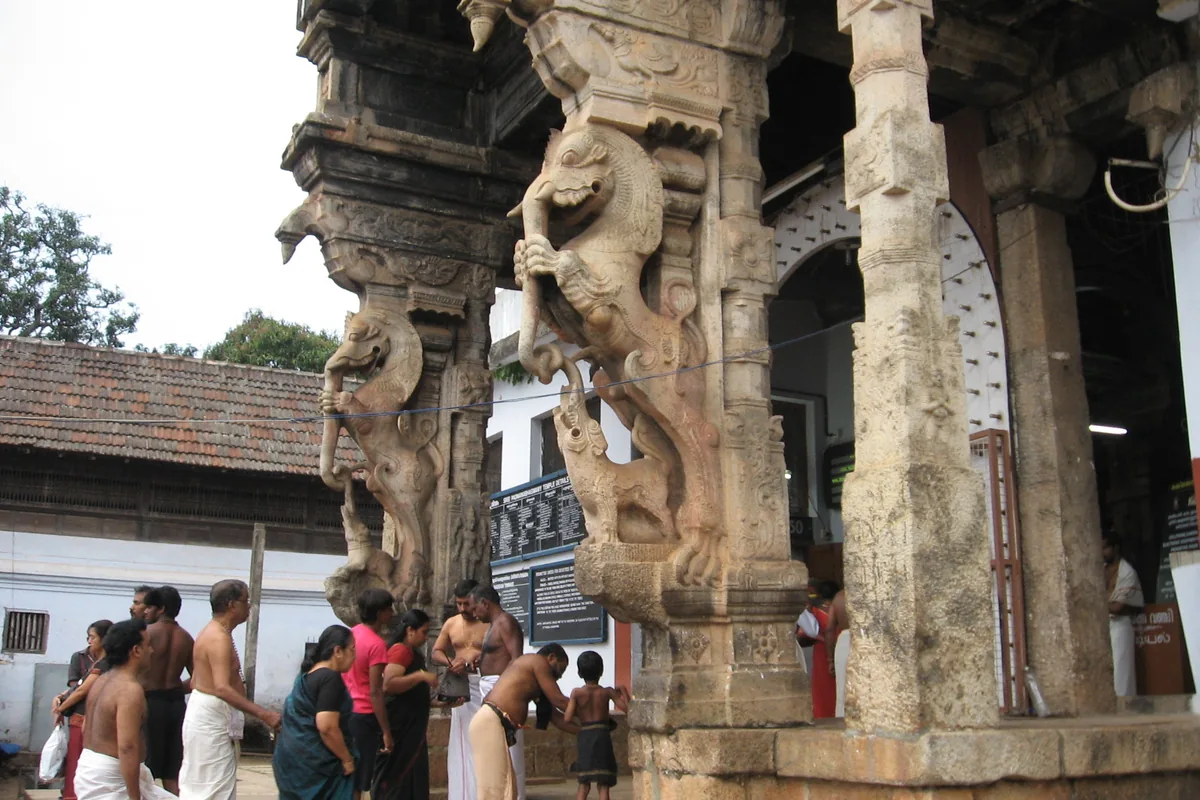
- Men: a mundu or dhoti, with the upper body completely bare. A towel or angavastram over the shoulder is permitted. Shirts, vests and t-shirts are not, at any point.
- Women: a saree, a set-mundu, or a long skirt with a blouse.
- Girls under twelve: a long skirt and blouse, or a plain gown.
- Boys under twelve: a mundu or shorts, and a shirt is allowed.
Always refused: trousers, jeans, shorts on adult men, leggings, salwar kameez and churidar on women, and any western dress.
Mundus are rented from stalls outside the temple for roughly ₹50 to ₹100, which solves the problem for men. Women have a harder time of it, because a saree is not something you improvise at a stall, so bring or arrange the right clothing before you travel. The full breakdown is on the dress code page, and if you are unfamiliar with how a mundu is worn, our Kerala temple dress code guide covers it.
Phones and cameras do not go in. Ever.
No, mobile phones are not allowed inside Padmanabhaswamy Temple. Neither are cameras of any kind. This is the second most common thing that catches visitors out and there is no way around it.
Three points that people ask about and the answers are all the same.
- There is no photography permit for the deity. A camera permit exists for parts of the complex in certain circumstances, but nothing permits photographing inside the sanctum.
- Switching the phone off is not sufficient. It goes to the cloakroom regardless.
- Smartwatches count. Anything with a camera or a recording capability is treated the same way.
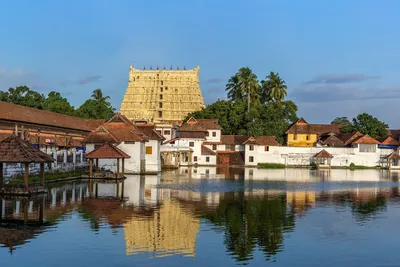
The practical consequence: take your photographs before you enter. The classic shot of the seven-storey gopuram reflected in the Padma Theertham tank is taken from outside the checkpoint, so do that first, then deposit everything. This is also why every image of the idol in circulation is a painting rather than a photograph.
What the cloakroom takes, and how it works
The cloakroom is a working part of the visit rather than an afterthought, and there is a queue for it even at 3:00 AM before Nirmalya Darshanam.
Deposited: phones, cameras, smartwatches, bags and rucksacks of any size, footwear, and generally anything you cannot carry in your hands.
Two pieces of practical advice that make the whole thing faster.
- Travel light to the temple. Everything you bring is one more thing to hand over and collect. Leave the daypack at your hotel.
- Carry cash separately. You need it at the ticket counter, and you do not want it inside a deposited bag.
Collect your belongings on the way out, at the same counter. Build in ten minutes at each end for this; on a busy evening it can be more.
Leather, food and the rest of the list
Beyond clothing and electronics, a handful of other things are refused or must be left behind.
- Leather items. Belts, wallets and bags in leather are not taken into the temple. A leather belt is easy to forget when you have changed into a mundu, so check.
- Footwear. Left outside, without exception. The granite gets genuinely hot on an afternoon, so consider the timing if you are sensitive to that.
- Outside food and drink. Not carried in.
- Tobacco, alcohol and anything intoxicating. Refused, and visiting under the influence is not acceptable.
- Weapons of any kind, including pocket knives and multi-tools.
Traditional practice also asks devotees to bathe before darshan and to come on an empty stomach where possible. These are not checked at the gate, but they are the expectation among regular worshippers and are worth knowing.
Who is allowed to enter the temple
Entry is restricted to Hindus. This is displayed at the entrance and it is enforced. Non-Hindu visitors, Indian or foreign, are not admitted to the temple complex.
The restriction is not aimed at foreigners specifically. Foreign nationals who are practising Hindus are admitted, and non-Hindu Indians are not. In practice visitors who are not obviously local may be asked to sign a declaration of faith at the entrance, and the temple authorities have discretion in how they apply this.
We have given the history and the reasoning behind this rule its own page, because it is the most searched question about the temple and it deserves more than a line: see why non-Hindus are not allowed inside.
If you cannot enter, the temple is still worth the trip. The exterior and the seven-storey gopuram are seen from the Padma Theertham tank outside the checkpoint, the Kuthiramalika Palace Museum next door is open to everybody, and the surrounding sights are all unrestricted.
Parking, autos and the last stretch
The temple sits at East Fort in the old part of Thiruvananthapuram, and the immediate approach is narrow, congested and not designed for cars.
- Parking is limited and it fills. There is paid parking in the East Fort area but it is not extensive, and on weekends and festival days it is effectively full from mid-morning.
- Autos are the practical answer for the last stretch from anywhere in the city. Agree the fare or insist on the meter before you get in.
- Thampanoor, the main railway station and the KSRTC bus stand, is roughly two kilometres away, which is a short auto ride or a walk of twenty-five minutes.
- Trivandrum International Airport is about six kilometres from the temple.
At 3:00 AM for the Nirmalya slot, autos are scarce and app cabs unreliable, so pre-book a taxi the night before. Full detail on trains, buses and the airport is on the how to reach page.
The checkpoint, in the order it happens
Knowing the sequence removes almost all of the friction. It runs like this.
- Approach and change. Rent or put on a mundu outside if you have not already. Do this away from the gate, not in the queue.
- Dress check. Staff check clothing before anything else. The decision is final and is not negotiated.
- Cloakroom. Phones, cameras, bags and footwear deposited. Keep cash on you.
- Ticket counter, if you need one. General darshan is free and needs no ticket. Special entry is about ₹150, Nirmalya Darshanam is separate. Cash only, no online sales. See the tickets page.
- The queue.
- The three doors of the sanctum, then out, then collect your belongings.
Allow ten minutes at each end for the cloakroom and expect the whole visit to run between forty minutes and an hour and a half depending on the slot.
How to behave once you are through
Inside, the expectations are simple and mostly about the queue.
- Keep moving. The line does not pause for individuals. You get seconds at each of the three doors, so know in advance what you want to look at.
- Do not touch the sanctum or the Ottakkal Mandapam. The single-slab hall in front of the sanctum is roped off; you pass its edge.
- Silence, or close to it. Conversation inside is not appropriate.
- Offerings go through the counters and the staff, not directly.
- Do not attempt to record anything. Even if a device somehow came through, using it inside would be a serious matter.
The five-hour midday closure from 12:00 PM to 5:00 PM is worth repeating here as a practical rule, because more visits are ruined by turning up at 2:00 PM than by any of the restrictions on this page.
Five mistakes that cost people their darshan
These are the failures we see described over and over, in roughly the order of how often they happen.
- Arriving between noon and five. The sanctum is shut for those five hours every single day and there is nothing to wait for. More visits are wasted this way than by every clothing rule combined. Check the timings page before you set out.
- Bringing a phone and assuming it can stay in a pocket. It cannot. It goes to the cloakroom, and on a busy evening that queue costs you fifteen minutes at each end.
- Buying a mundu but keeping the shirt on. Half a solution is no solution. Adult men enter with the chest bare, and an angavastram over the shoulder is the only upper cloth permitted.
- Assuming salwar kameez will pass. It is accepted at most temples across India and it is refused here. Women need a saree, a set-mundu, or a long skirt with a blouse.
- Trying to pay by card. The counters are cash. There is no online booking for anything, from any website or agent.
Every one of these is solved before you leave your hotel. The first-time visitor guide runs the whole day in order, including what to sort out the night before.
Key points to remember
- Dress is checked first and refusals are final: men in a mundu with the chest bare, women in a saree or set-mundu.
- Trousers, jeans, shirts, leggings and salwar kameez are always refused. Mundus rent outside for ₹50 to ₹100.
- Mobile phones and cameras are never allowed inside. There is no permit. Take photographs before you enter.
- Footwear, bags, smartwatches and leather items all go to the cloakroom. Keep your cash on you.
- Entry is restricted to Hindus and this is enforced at the entrance.
- Parking at East Fort is limited and fills on weekends. Autos are the practical answer for the last stretch.
- The sanctum is shut from 12:00 PM to 5:00 PM daily, which trips up more visitors than any restriction.
Sources and further reading
Temple rules, answered
Ten questions on phones, dress, bags, entry and parking at Sree Padmanabhaswamy Temple.
Is a mobile phone allowed inside Padmanabhaswamy Temple?
No. Mobile phones are not allowed inside under any circumstances. They are deposited at the cloakroom before you enter, along with cameras, smartwatches and bags. Switching the phone off makes no difference; it still goes to the counter.
Can I take photos at Padmanabhaswamy Temple?
Not inside. There is no permit that allows photography of the deity or the sanctum. Photograph the exterior and the seven-storey gopuram from the Padma Theertham tank before you pass the checkpoint, because everything is deposited after that.
What is the dress code at Padmanabhaswamy Temple?
Men wear a mundu or dhoti with the upper body completely bare. Women wear a saree, a set-mundu, or a long skirt with a blouse. Trousers, jeans, shorts on adult men, leggings, salwar kameez and churidar are always refused. Mundus can be rented outside for about ₹50 to ₹100.
Are bags allowed inside the temple?
No. Bags and rucksacks of any size are left at the cloakroom, along with footwear. Travel light to the temple and keep your cash on you, because you will need it at the ticket counter and you do not want it inside a deposited bag.
Can non-Hindus enter Padmanabhaswamy Temple?
No. Entry is restricted to Hindus and this is displayed at the entrance and enforced. The rule applies to Indians and foreigners alike; foreign nationals who are practising Hindus are admitted. Visitors may be asked to sign a declaration of faith.
Are leather items allowed inside?
No. Leather belts, wallets and bags are not taken into the temple. A leather belt is easy to overlook once you have changed into a mundu, so check before you reach the gate.
Is there parking at Padmanabhaswamy Temple?
There is paid parking in the East Fort area but it is limited and fills from mid-morning on weekends and festival days. The approach roads are narrow and congested, so an auto for the last stretch is usually the easier option.
How far is the temple from Thiruvananthapuram railway station?
Thampanoor, which is the main railway station and the KSRTC bus stand, is roughly two kilometres from East Fort. That is a short auto ride or a walk of about twenty-five minutes. The airport is about six kilometres away.
Do I need a ticket to enter Padmanabhaswamy Temple?
No. General darshan is completely free and needs no ticket. You only pay for special entry darshan, which is about ₹150 for a shorter queue, or for Nirmalya Darshanam at 3:30 AM. Both are sold in cash at counters on site and never online.
What time is the temple closed during the day?
It is shut completely from 12:00 PM to 5:00 PM every day. Nothing in the complex is accessible during those five hours. More visits are wasted by arriving in that window than by any other mistake.