Why non-Hindus cannot enter, and what you can still see
It is the single most searched question about this temple, and the answer is short and unwelcome: no. Entry to Sree Padmanabhaswamy is restricted to Hindus, it is displayed at the entrance, and it is enforced. That is worth understanding properly rather than discovering at the gate after a long journey, so this page covers where the rule comes from, how it is actually applied, what happens if you are asked, and what a refused visitor can still do with the day.
The short answer
No. Entry to Padmanabhaswamy Temple is restricted to Hindus and the rule is displayed at the entrance and enforced by staff. It is not a rule about nationality: foreign nationals who are practising Hindus are admitted, and non-Hindu Indians are not. Visitors who are not obviously local may be asked to sign a declaration of faith. The rule is a temple-level tradition, not a government one, and it is common at traditional Kerala temples rather than unique to this one.
What the restriction actually says
Signage at the entrance states that entry is permitted to Hindus only. There is no ticket, donation or permission that changes it, and it applies to the temple complex, not merely the sanctum.
Two clarifications, because both are misunderstood constantly.
- It is about religion, not nationality. A French or American visitor who is a practising Hindu can be admitted. An Indian citizen who is Christian, Muslim, Jain or of no faith cannot.
- It sits alongside the dress code, it does not replace it. Being Hindu gets you past this rule and straight into the next one, which is the strictest dress code of any major temple in Kerala. Both have to be satisfied. See the dress code page.
The restriction is a temple tradition maintained by the temple's administration. It is not a law of the state of Kerala or of India, and there is no government body enforcing it. That distinction matters for understanding why it persists.
Where the restriction comes from
Traditional temple practice in much of India, and especially in Kerala, treats the temple as a ritually sealed space rather than a public building. The consecration of the deity, the daily ritual cycle and the physical fabric of the sanctum are all understood as maintaining a state of purity that admission rules exist to protect.
At Padmanabhaswamy that thinking has an unusually strong institutional backing, because the temple has not merely been a shrine. Since the Thrippadidanam of 1750 the deity has been the notional sovereign of Travancore, with the ruler acting as Padmanabhadasa, his servant. A temple that functioned as the seat of a kingdom's sovereignty was never going to develop an open-door tradition.
It is worth being precise about what this history is and is not. Kerala's temples also carry a much darker history of exclusion by caste, which the Temple Entry Proclamation of 1936, issued by the Travancore ruler, formally ended by opening the state's temples to all Hindus regardless of caste. That proclamation is one of the landmark reforms of the period.
The religion-based restriction is a separate thing from the caste-based exclusion that was abolished, and it survived that reform.
Why this is common across Kerala
Visitors often read the rule as a judgment aimed at them personally. It is more useful to see it as a regional norm that this temple happens to apply strictly.
Many traditional Kerala temples restrict entry to Hindus, including major shrines at Guruvayur and elsewhere. Some have made high-profile exceptions for individual public figures; others have not. Practice varies and is decided temple by temple.
Elsewhere in India the picture is completely different. The great temples of Tamil Nadu, most north Indian temples, and Sikh gurdwaras admit visitors of any faith, with gurdwaras in particular treating open access as a religious principle. So a traveller doing a broad Indian itinerary will meet this restriction in Kerala far more than anywhere else.
The practical implication for planning: do not generalise from your experience at other Indian temples, in either direction. Check the specific temple.
How it is actually applied at the entrance
Enforcement is by temple staff at the entrance and their decision is final. There is no appeal and no supervisor to escalate to.
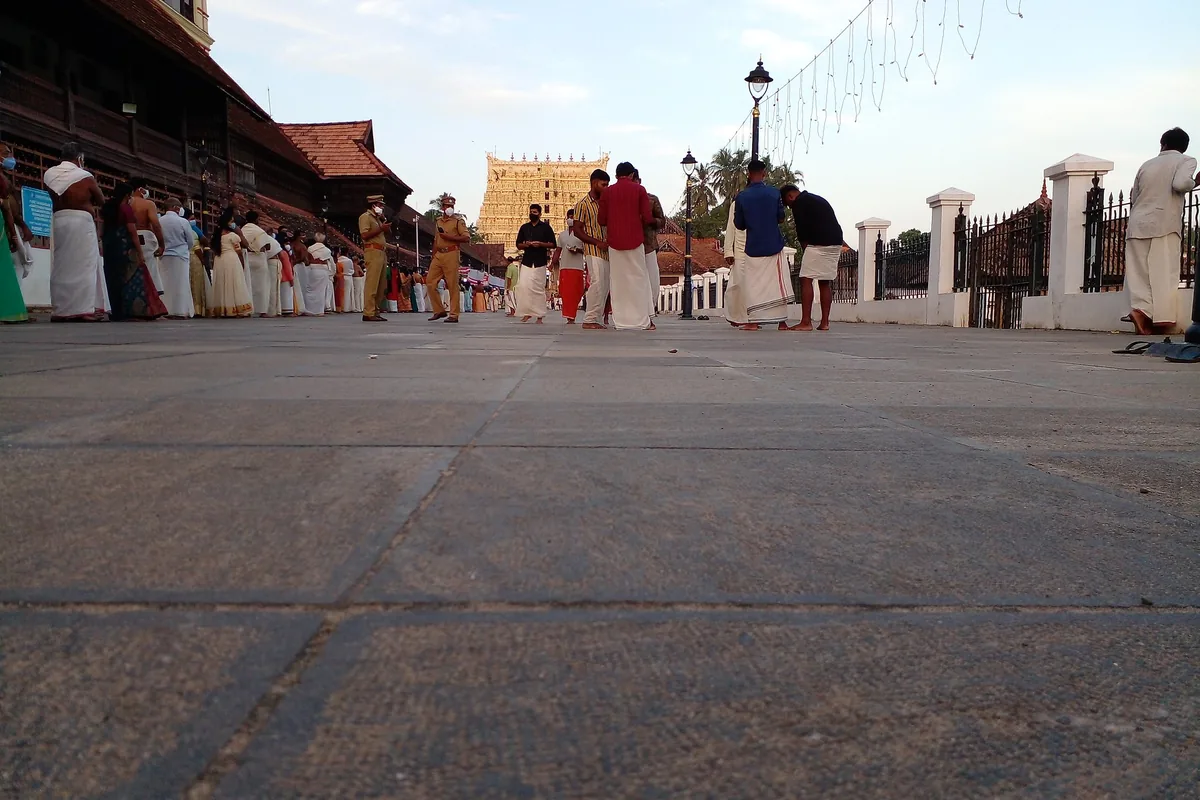
In practice, visitors who are visibly local and dressed correctly are not usually questioned. Visitors who are not, including foreign nationals and Indians who do not read as local, may be asked directly about their faith and may be asked to sign a declaration stating that they are Hindu and that they believe in the deity.
Do not treat that declaration as a formality to be signed to get in. Staff take it seriously, signing it falsely would be a straightforward deception in a religious setting, and being challenged inside would be considerably worse than being refused outside.
The dress check happens in the same sequence, so a visitor may clear one and fall at the other. Our temple rules page sets out the whole checkpoint in order.
Foreigners, converts and mixed groups
Three situations come up repeatedly and deserve direct answers.
Foreign practising Hindus. Admitted in principle. In practice, expect to be asked, expect to sign the declaration, and expect the process to take longer than it does for a local devotee. Dressing correctly in advance helps a great deal, because it signals familiarity.
Converts to Hinduism. Also admitted in principle, and the same process applies. There is no formal certification requirement, though some visitors carry documentation from a temple or organisation they are associated with.
Mixed families and groups. This is the hardest one, and it happens often: one partner or family member can enter and another cannot. Plan for it rather than discovering it at the gate. The workable arrangement is to split for an hour, with those who cannot enter spending it at the tank and the palace next door, and to regroup afterwards.
Whatever your situation, the decision belongs to the staff on the day. Nothing on this page overrides that.
The legal and public position
The restriction has been debated for as long as it has existed, and the debate has not moved it.
Arguments for it come from within the tradition: a consecrated temple is not a monument, ritual purity is a live concern rather than a symbolic one, and a religious community is entitled to set the conditions of access to its own place of worship.
Arguments against it are that a temple of this historical importance has value to everybody, that tourism and scholarship are shut out of a significant site, and that a restriction of this kind sits awkwardly in a modern constitutional order.
The courts have generally been reluctant to interfere with the internal religious practice of temples on questions of this kind, and no ruling has opened Padmanabhaswamy to non-Hindus. The extensive litigation over the vaults and the management concerned property and administration, not entry.
The realistic assessment for a traveller planning today: the rule is stable and will apply to your visit.
What you can see and do instead
A refused visitor still has a genuinely good day available, and most of the temple's visual signature is outside the checkpoint anyway.
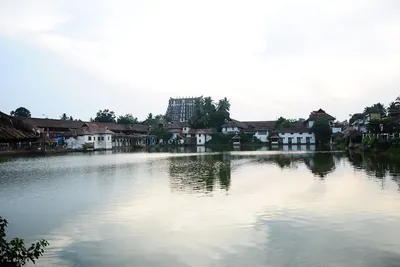
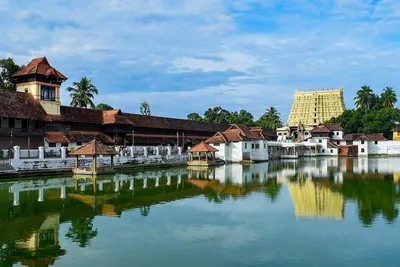
- The gopuram from Padma Theertham. The seven-storey tower reflected in the tank is the photograph everyone knows, and it is taken from outside the restricted area. You are not missing this.
- Kuthiramalika Palace Museum, immediately next door, open to everybody, holding the Travancore royal collections. This is the substitute that actually satisfies.
- The Aarat procession. During Painkuni or Alpashy Utsavam the deity is carried out of the temple to Shanghumugham beach. It happens on public streets, anyone may watch, and photography is unrestricted. This is the single best opportunity to see something central to the temple's religious life without entering it.
- The Napier Museum and Sree Chitra Art Gallery, four kilometres north, covering the region's bronzes, ivories and painting.
Our places to visit guide covers all of these with distances and timings.
How to handle it well
A few practical suggestions, offered without moralising.
- Decide before you travel. The worst version of this is a long journey ending in a conversation at a gate. Knowing in advance turns a refusal into a plan.
- Do not argue with staff. They apply a rule they did not write and cannot waive.
- Do not misrepresent your faith. Beyond the ethics, being challenged inside a temple is a far worse outcome than being turned away outside it.
- Do not photograph past the checkpoint. Photography is prohibited inside for everybody, and attempting it from the boundary is not appreciated.
- Build the alternative into the day deliberately. The palace, the tank and the museums make a good afternoon on their own terms, not as consolation.
If your visit falls during a festival, plan around the Aarat. That is the version of this trip that works best for a visitor who cannot go in.
Key points to remember
- Entry is restricted to Hindus. It is displayed at the entrance, enforced by staff, and there is no exception to buy.
- The rule is about religion, not nationality. Foreign practising Hindus are admitted; non-Hindu Indians are not.
- Visitors who do not read as local may be asked to sign a declaration of faith. Do not sign it falsely.
- It is a temple tradition, not a government law, and it is common at traditional Kerala temples rather than unique here.
- The 1936 Temple Entry Proclamation ended caste-based exclusion; the religion-based restriction is separate and survived it.
- The gopuram reflected in Padma Theertham is photographed from outside the checkpoint. You do not miss that shot.
- The Aarat procession during Painkuni or Alpashy happens on public streets and anyone may watch it.
The entry rule, answered
Ten questions on who may enter, how it is checked and what to do if you cannot.
Can non-Hindus enter Padmanabhaswamy Temple?
No. Entry is restricted to Hindus. The rule is displayed at the entrance and enforced by temple staff, whose decision is final. There is no ticket, donation or permission that changes it, and it applies to the whole complex rather than just the sanctum.
Can foreigners visit Padmanabhaswamy Temple?
Foreign nationals who are practising Hindus can be admitted, because the rule is about religion rather than nationality. Expect to be asked about your faith and to be asked to sign a declaration. Foreign visitors who are not Hindu are not admitted.
Why are non-Hindus not allowed inside?
Traditional Kerala temple practice treats the temple as a ritually sealed space rather than a public building, with admission rules protecting the purity maintained by the consecration and the daily ritual cycle. At this temple that thinking is reinforced by its history as the seat of Travancore's sovereignty after 1750.
Do I have to sign a declaration to enter?
Visitors who are not obviously local, including foreign nationals, may be asked to sign a declaration stating that they are Hindu and believe in the deity. Staff take it seriously. Signing it falsely would be a deception in a religious setting, and being challenged inside is a much worse outcome than being refused outside.
Is the restriction a government law?
No. It is a temple-level tradition maintained by the temple's administration, not a law of Kerala or of India. Courts have generally been reluctant to interfere with the internal religious practice of temples on questions of entry, and no ruling has opened this temple to non-Hindus.
Do other Kerala temples have the same rule?
Many traditional Kerala temples restrict entry to Hindus, including major shrines such as Guruvayur. Practice varies temple by temple. Elsewhere in India the picture is very different: most Tamil Nadu and north Indian temples, and all Sikh gurdwaras, admit visitors of any faith.
What is the 1936 Temple Entry Proclamation?
It was issued by the Travancore ruler and formally opened the state's temples to all Hindus regardless of caste, ending a much darker history of caste-based exclusion. It is a landmark reform, but it is a separate matter from the religion-based restriction, which survived it.
What can I see if I cannot enter the temple?
The seven-storey gopuram reflected in the Padma Theertham tank, which is outside the checkpoint and is the classic photograph anyway. Kuthiramalika Palace Museum next door, open to everybody. The Napier Museum and Sree Chitra Art Gallery four kilometres north. And during a festival, the Aarat procession on public streets.
Can I watch the Aarat procession if I am not Hindu?
Yes. The procession leaves the temple and travels through public streets to Shanghumugham beach, so anyone may watch it regardless of faith, the temple dress code does not apply outside, and photography is unrestricted. It is the best opportunity to see something central to the temple's religious life without entering.
What if part of my group can enter and part cannot?
This happens often with mixed families. Plan for it in advance rather than discovering it at the gate. The workable arrangement is to split for about an hour, with those who cannot enter spending the time at the tank and Kuthiramalika Palace next door, then regrouping afterwards.