Attukal Pongala, the day Thiruvananthapuram becomes one kitchen
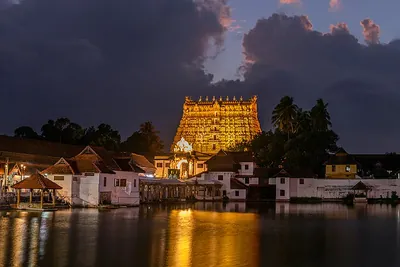
Two kilometres from Padmanabhaswamy Temple, one morning every year, several million women light brick hearths on the streets of Thiruvananthapuram and cook rice in earthen pots. It holds a Guinness World Record as the largest annual gathering of women anywhere on earth. This covers the 2027 date, how the ten-day festival is structured, what actually happens hour by hour, and how to plan a visit that does not collide with it.
The short answer
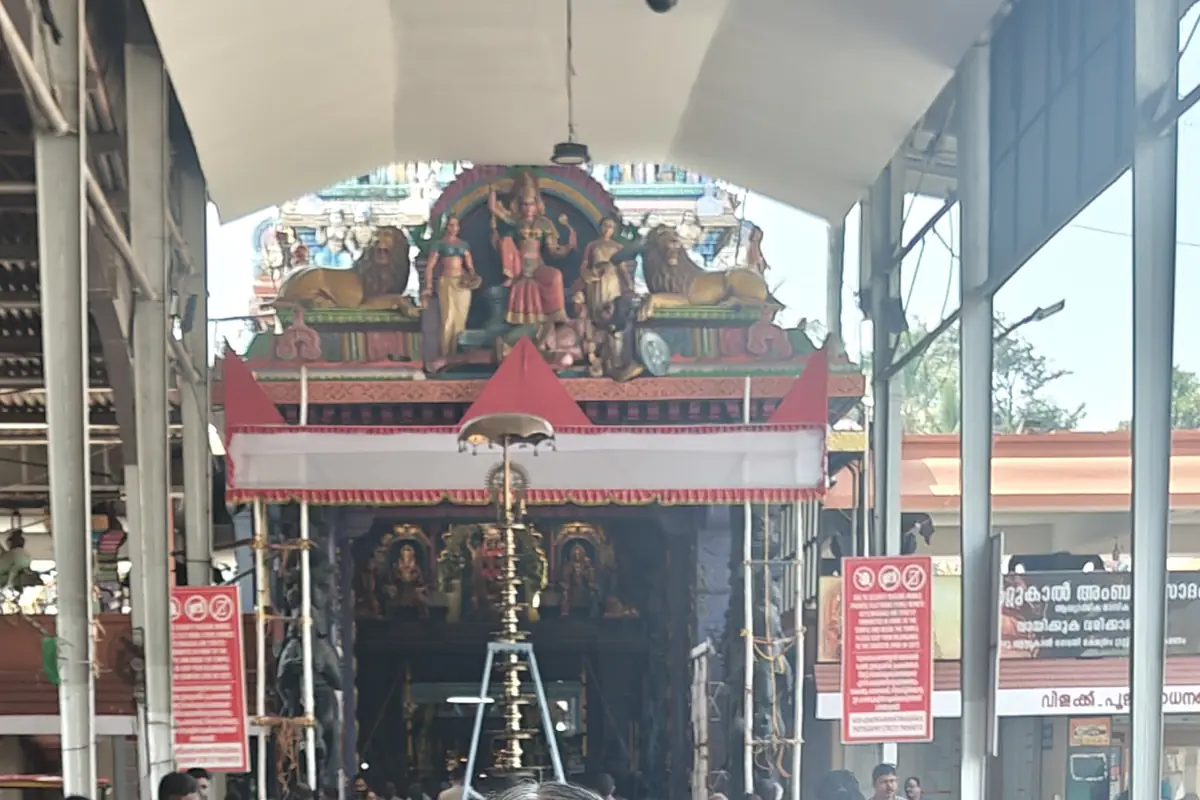
Attukal Pongala 2027 falls on Monday, 22 February 2027. It is the ninth day of a ten-day festival at the Attukal Bhagavathy Temple in Thiruvananthapuram, about 2 km from Padmanabhaswamy Temple. Women cook pongala, a rice offering, on temporary brick hearths that fill the temple grounds and then several kilometres of surrounding streets. Only women make the offering. The festival holds a Guinness World Record for the largest annual gathering of women for a religious activity, first entered in 1997 with 1.5 million participants and surpassed in 2009 with 2.5 million. The date follows the Malayalam calendar and moves every year, so confirm with the temple before booking.
When Attukal Pongala falls in 2027
Attukal Pongala 2027 is on Monday, 22 February 2027. The offering is made on the ninth day of a ten-day festival, and the ninth day is fixed by the Pooram star falling in the Malayalam month of Kumbham, which straddles February and March.
Because it is tied to a lunar-stellar calendar rather than a solar one, the date moves by up to three weeks year to year. In 2026 it fell on 3 March. In 2027 it comes almost ten days earlier.
| What and when | Day | Open to |
|---|---|---|
| Kappukettu, the flag raisingThe festival is formally opened and the temple is bound for the ten days that follow. | Day 1 | All devotees |
| Temple songs and Kannaki recitationThe story of the goddess is sung in instalments across the middle days of the festival. | Days 2 to 8 | All devotees |
| Pongala, 22 February 2027The hearths are lit from the temple fire and the rice offering is cooked across the city. | Day 9 | Women only |
| Kuruthitharpanam, that nightThe closing ritual of the festival, performed after the pongala offering is complete. | Day 10 | All devotees |
Treat the day numbers as the shape of the festival rather than as a booking calendar. The temple publishes its own programme each year, and the sequence of subsidiary rituals varies. The one date worth planning around is the pongala day itself.
What pongala actually is
Pongala is rice cooked until it boils over. The name comes from the Malayalam for boiling over, and the moment the pot froths past its rim is the point of the whole exercise: the offering is considered accepted at that instant.
The equipment is deliberately minimal. Three bricks or three stones make a hearth, an earthen pot sits on top, and firewood goes underneath. There is no kitchen, no gas and no shelter. Women arrive before dawn, claim a patch of pavement, road, median, courtyard or verge, and build the hearth where they stand.
What goes in the pot varies by household:
- Vella pongala — rice cooked with milk, banana and rock sugar. The plainest and most common form.
- Sharkkara pongala — rice with jaggery, coconut and cardamom, closer to a sweet payasam.
- Therali and mandaputtu — steamed rice preparations offered alongside the pot in many families.
Nothing about it is a competition and nothing is judged. The offering is the act, not the result, and a pot that cracks is replaced without ceremony.
Attukal Amma and the Kannaki story
The presiding deity of the Attukal temple is Attukal Amma, understood as a form of Bhadrakali. In the temple's own tradition she is identified with Kannaki, the heroine of the Tamil epic Silappadikaram, who burned the city of Madurai after its king wrongly executed her husband and who is said to have rested at Attukal on her journey afterwards.
That identification is what makes the festival what it is. Kannaki's story is one of a wronged woman whose grief has consequences, and the pongala is offered to her by women, in enormous numbers, without priestly mediation. The devotee cooks the offering herself, at her own hearth, in the open.
It is why the temple is widely called the Sabarimala of women — a counterpart to the Ayyappa pilgrimage in the same state, which in practice draws overwhelmingly male crowds. If you are interested in that side of the comparison, our Sabarimala calendar guide sets out how that season works.
During the pongala itself, the goddess is believed to be present among the women at the hearths rather than only inside the sanctum. It is not a spectator ritual with a stage.
The world record, and what the numbers really mean
Attukal Pongala holds the Guinness World Record for the largest annual gathering of women for a religious activity. The record was first entered in 1997, when roughly 1.5 million women took part, and was surpassed in 2009 with about 2.5 million. Recent years have been reported at figures approaching four million.
Two things are worth understanding about those numbers.
First, they are estimates of a crowd spread across a city, not headcounts at a gate. The hearths run outward from the temple along roads, lanes, railway station forecourts, school grounds and private compounds for several kilometres in every direction. There is no perimeter to count at.
Second, the scale is genuinely hard to picture until you see it. For a morning, the functional centre of Thiruvananthapuram is not a road network. It is a continuous field of small fires, and ordinary movement through the city stops.
How the pongala day actually runs
The published times shift slightly from year to year, but the sequence does not.
- Overnight and before dawn. Women arrive and claim hearth space. Prime spots near the temple are taken many hours ahead, and many families send someone the previous evening.
- Mid-morning: the pandara aduppu is lit. The temple's own principal hearth is kindled from the sanctum fire. This is the signal for the entire city.
- The fire spreads outward. Flame is passed hearth to hearth, from the temple outward through the streets. Nobody lights independently; the whole offering is understood to come from one fire.
- Cooking. Pots are watched until they boil over. This takes a couple of hours and is the quietest part of the day.
- Early afternoon: the sprinkling. Temple priests move through the streets sprinkling holy water on the finished pots, which completes the offering. This takes a long time, because there is a great deal of ground to cover.
- Night: Kuruthitharpanam. The closing ritual at the temple.
After the sprinkling, the crowd disperses very quickly and the city clears over a few hours. Cooked pongala is carried home and shared.
What to bring if you are making the offering
Nothing is sold to you at the temple and nothing is provided. Everything at your hearth is yours.
- An earthen pot, three bricks and firewood. All three are sold on the roadsides around the temple in the days beforehand, and prices rise as the day approaches. Buying early is normal.
- Rice, jaggery or milk, coconut, banana, cardamom — whichever form of pongala your family makes.
- Water, more than you think. Public supply points exist but they are heavily used.
- Sun cover. You will be sitting beside an open fire in Kerala in February, from before dawn to early afternoon. Shade at your spot is worth more than proximity to the temple.
- A companion to hold the spot, if you want anywhere close in.
There is no dress code of the kind Padmanabhaswamy enforces. Ordinary modest clothing is what everyone wears, and cotton is sensible next to a wood fire. Our Kerala temple dress code guide explains where the strict rules do and do not apply across the state.
Getting there, and what the city does that day
The Attukal Bhagavathy Temple is about 2 km from Padmanabhaswamy Temple and roughly the same from Thiruvananthapuram Central Railway Station, in the Manacaud area of the city.
On pongala day, that proximity matters less than it sounds, because the normal ways of covering 2 km stop working:
- Roads across central Thiruvananthapuram are closed or occupied by hearths. Not diverted, occupied.
- Autos and taxis will not get near the temple. Expect to walk the final stretch, and possibly a long one.
- Trains and buses into the city run heavily loaded for two days beforehand. Reserve well ahead.
- Hotels in the city are booked out months in advance, and rates rise sharply. See hotels nearby for the areas that stay walkable.
The practical consequence: if you are in Thiruvananthapuram on pongala day for any other reason, plan on doing nothing else. For how the city is normally laid out for a visitor, see how to reach.
Combining it with a Padmanabhaswamy visit
The two temples are close enough to visit in one morning on an ordinary day. On pongala day, they are not.
Padmanabhaswamy keeps its own schedule through the festival, but the approach to Fort and East Fort is affected by the same crowd, and the temple's rules do not relax for anything happening elsewhere in the city. The dress code still applies exactly, the entry restriction still applies, and the sanctum still shuts for five hours in the middle of the day, as set out on our timings page.
The arrangement that works: take your Padmanabhaswamy darshan on a morning either side of pongala day, ideally in the 8:30 to 10:00 AM window, and keep pongala day itself entirely free. Trying to do both on the same morning means doing neither properly.
If you are building a Thiruvananthapuram trip around February, our places to visit near the temple guide and the Trivandrum tourist places page cover what else is within reach, most of which is also unreachable on the day itself.
Key points to remember
- Attukal Pongala 2027 falls on Monday, 22 February 2027, the ninth day of a ten-day festival.
- The date is fixed by the Pooram star in the Malayalam month of Kumbham, so it moves every year.
- Only women make the pongala offering; men present are temple staff, priests and security.
- It holds a Guinness World Record as the largest annual gathering of women, first entered in 1997 with 1.5 million and surpassed in 2009 with 2.5 million.
- Hearths are lit from a single temple fire mid-morning and the offering completes when priests sprinkle holy water in the early afternoon.
- The temple is about 2 km from Padmanabhaswamy, but central Thiruvananthapuram is impassable on the day.
- Bring your own pot, bricks, firewood, ingredients, water and sun cover. Nothing is provided.
- Take your Padmanabhaswamy darshan on a different morning. Do not try to combine the two.
Sources and further reading
Attukal Pongala, answered
Ten questions on the date, the offering, who can take part and how to plan around it.
When is Attukal Pongala in 2027?
Attukal Pongala 2027 falls on Monday, 22 February 2027. It is the ninth day of the ten-day festival at the Attukal Bhagavathy Temple in Thiruvananthapuram. The date is fixed by the Pooram star in the Malayalam month of Kumbham and therefore moves each year; in 2026 it fell on 3 March.
What is Attukal Pongala?
Pongala is an offering of rice cooked until it boils over, prepared by women on temporary three-brick hearths in the open. At Attukal, several million women cook it simultaneously across the streets of Thiruvananthapuram on a single morning, all lit from one fire kindled at the temple.
Can men attend Attukal Pongala?
The offering itself is made only by women. The men present near the temple on pongala day are temple authorities, priests and security personnel. Men in the wider city help with preparation, transport and supplies, but they do not cook the offering.
Why does Attukal Pongala hold a Guinness World Record?
It is recognised as the largest annual gathering of women for a religious activity. The record was first entered in 1997 with roughly 1.5 million participants and was surpassed in 2009 with about 2.5 million. Recent years have been reported at figures approaching four million.
How far is Attukal temple from Padmanabhaswamy Temple?
About 2 km, in the Manacaud area of Thiruvananthapuram, and roughly the same distance from Thiruvananthapuram Central Railway Station. On an ordinary day both temples fit comfortably into one morning. On pongala day the roads between them are occupied by hearths and closed to traffic.
What do I need to bring to make pongala?
An earthen pot, three bricks for the hearth, firewood, your ingredients, and plenty of drinking water. Pots, bricks and firewood are sold on the roadsides near the temple in the preceding days, with prices rising as the date approaches. Sun cover matters more than a spot close to the temple.
Who is the deity at Attukal temple?
Attukal Amma, understood as a form of Bhadrakali. In the temple's tradition she is identified with Kannaki, the heroine of the Tamil epic Silappadikaram, who is said to have rested at Attukal after the burning of Madurai. That story is why the offering is made by women.
Is there a dress code for Attukal Pongala?
There is no strict enforced dress code of the kind Padmanabhaswamy applies at its gate. Ordinary modest clothing is what everyone wears. Cotton is sensible, since you will be sitting beside an open wood fire for several hours.
Can I visit Padmanabhaswamy Temple on pongala day?
Padmanabhaswamy keeps its own schedule, but reaching Fort and East Fort is difficult because central Thiruvananthapuram is closed to traffic. Take your darshan on a morning before or after pongala day instead, and keep the day itself free.
Where do the hearths go and how far do they spread?
Outward from the temple for several kilometres in every direction, along roads, lanes, medians, railway station forecourts, school grounds and private compounds. There is no boundary to the offering ground, which is why participant figures are estimates of a crowd across a city rather than a headcount at a gate.