Fifteen famous temples in Kerala, and what each one is actually for
Kerala's temples are not interchangeable. One holds the largest treasure ever inventoried at a religious site. One opens for barely two months a year. One is run by a woman. One puts seven and a half golden elephants on display for a single day. This guide gives each its district, its deity, the festival it is genuinely known for, and the entry and dress rules that decide whether you get in.
The short answer
The four most visited temples in Kerala are Sabarimala (Ayyappan, Pathanamthitta, open only in season), Guruvayur (Krishna, Thrissur), Sree Padmanabhaswamy (Vishnu, Thiruvananthapuram) and Attukal Bhagavathy (Bhadrakali, Thiruvananthapuram). Beyond those, Vadakkunnathan in Thrissur anchors Thrissur Pooram, Chottanikkara and Vaikom are among the oldest, and Mannarasala is a serpent shrine led by a woman. Most traditional Kerala temples admit only Hindus and enforce a dress code — men frequently remove their shirts, and trousers are refused at several. Check the individual temple before you travel.
All fifteen, with district and deity
Kerala has fourteen districts and every one of them has a shrine worth the detour. These are the fifteen that draw visitors from outside the state.
| Temple and what it is known for | District | Deity |
|---|---|---|
| Sree Padmanabhaswamy, ThiruvananthapuramThe world's richest temple, and an 18-foot reclining Vishnu seen through three doors. | Thiruvananthapuram | Vishnu |
| Sabarimala Sree DharmasasthaOpen only in season, reached on foot, and open to pilgrims of any religion. | Pathanamthitta | Ayyappan |
| Guruvayur Sree KrishnaThe Dwarka of the South, and Kerala's busiest venue for Hindu weddings. | Thrissur | Krishna |
| Attukal BhagavathyAttukal Pongala, the largest annual gathering of women on earth. | Thiruvananthapuram | Bhadrakali |
| Vadakkunnathan, ThrissurOne of Kerala's oldest and largest Shiva temples; Thrissur Pooram is held at its south gate. | Thrissur | Shiva |
| Chottanikkara BhagavathyA tenth-century shrine known for Makam Thozhal and for rites of mental healing. | Ernakulam | Bhagavathy |
| Vaikom Sree MahadevaVaikom Ashtami, and the site of the 1924 Vaikom Satyagraha over temple road access. | Kottayam | Shiva |
| Ettumanoor MahadevaThe seven and a half golden elephants, shown for one day a year, and the Nataraja mural. | Kottayam | Shiva |
| Ambalappuzha Sree KrishnaThe palpayasam, a milk offering with a reputation across South India. | Alappuzha | Krishna |
| Mannarasala Sree NagarajaA serpent grove with over 30,000 snake images, led by a woman. | Alappuzha | Nagaraja |
| Aranmula ParthasarathyA Divya Desam, and the Uthrattathi snake boat race on the Pamba. | Pathanamthitta | Krishna |
| Kodungallur Sree Kurumba BhagavathyThe Bharani festival, with oracles, ballads and rituals found nowhere else. | Thrissur | Bhadrakali |
| Sree Poornathrayeesa, TripunithuraVrishchikotsavam, among the largest utsavams in the state. | Ernakulam | Vishnu |
| Thirunelli Maha VishnuA forest shrine in Wayanad where ancestral rites are performed at the Papanasini stream. | Wayanad | Vishnu |
| Rajarajeshwara, TaliparambaOne of the most important Shiva temples in northern Kerala. | Kannur | Shiva |
The four that draw the most visitors
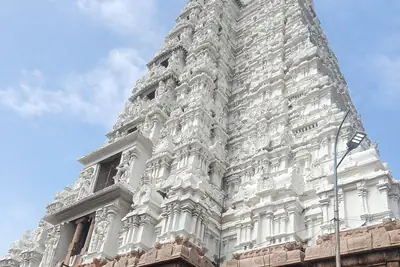
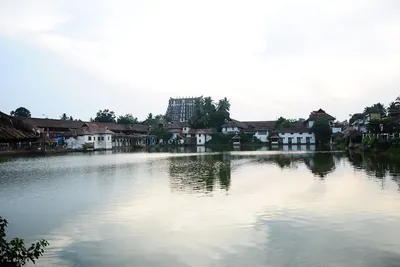
Sree Padmanabhaswamy Temple, Thiruvananthapuram
The most consequential temple in the state and, by accumulated treasure, the richest religious institution ever inventoried anywhere. Lord Vishnu reclines as Ananthashayanam on the serpent Anantha, and the idol is so long that it is viewed through three separate doors rather than one.
What makes it different in practice: the sanctum shuts for five hours in the middle of the day, the dress code is the strictest in Kerala and is enforced at the gate, and entry is restricted to Hindus. Five of its six vaults were opened under Supreme Court supervision in 2011; the sixth has never been opened.
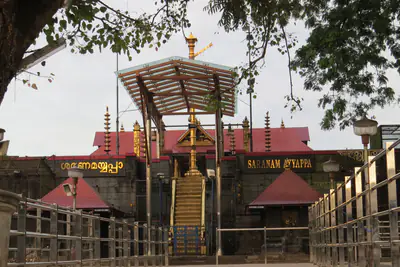
Sabarimala Sree Dharmasastha Temple, Pathanamthitta
Kerala's largest pilgrimage by numbers, and the most restricted by calendar. It sits at about 1,260 m inside the Periyar Tiger Reserve, and there is no road to the shrine. It opens for five days at the start of each Malayalam month, for the Mandala-Makaravilakku season in winter, and for Vishu.
Unusually, it is open to pilgrims of any religion who observe the 41-day vratham. Our Sabarimala calendar guide has the full 2026-27 dates.
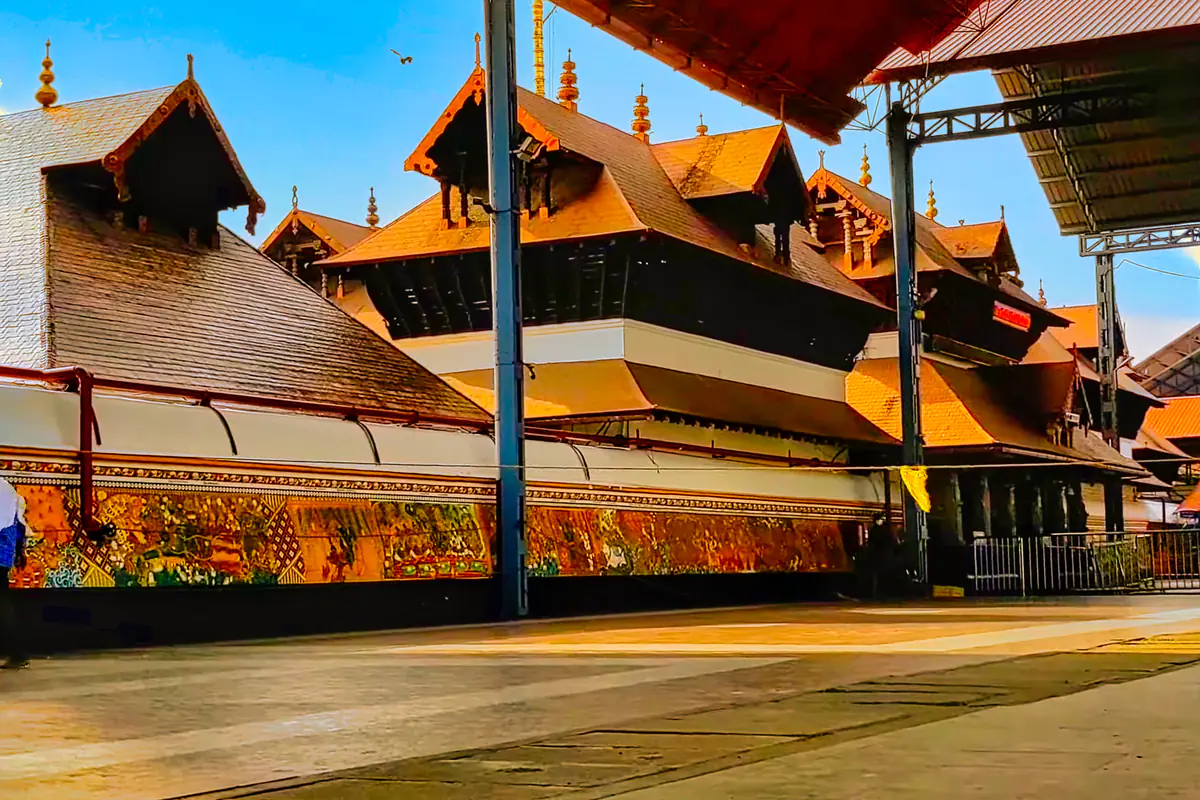
Guruvayur Sree Krishna Temple, Thrissur
Dedicated to Guruvayurappan, a form of Krishna, and widely called the Dwarka of the South. It was opened to all Hindus on 2 June 1947 following the Guruvayur Satyagraha, and it is one of the busiest venues in Kerala for Hindu weddings.
Three kilometres away, Punnathurkotta houses the temple's elephants, around thirty-five of them, most given as offerings by devotees. The temple's signature observance is Guruvayur Ekadasi, in the Malayalam month of Vrischikam.
Attukal Bhagavathy Temple, Thiruvananthapuram
Two kilometres from Padmanabhaswamy, and often called the Sabarimala of women. Its Attukal Pongala holds a Guinness World Record as the largest annual gathering of women for a religious activity, with millions cooking rice offerings on street hearths across the city in a single morning.
The Thrissur cluster
Thrissur district is the densest concentration of major temples in Kerala, and the reason the city calls itself the cultural capital of the state.
- Vadakkunnathan Temple sits on a hill in the middle of Thrissur city. It is one of Kerala's oldest and largest Shiva temples, and local tradition holds it was the first temple built by Parasurama. Thrissur Pooram, held at its south gate in April, is the largest temple festival in the state.
- Guruvayur is about 26 km northwest of Thrissur city, close enough to pair with Vadakkunnathan in one day.
- Kodungallur Sree Kurumba Bhagavathy Temple hosts the Bharani festival between the Bharani days of Kumbham and Meenam, usually March or April. It involves the dance of oracles, the Revathi lamp and the singing of the Bharani ballads, and it is unlike anything else in the Kerala calendar.
If you have two days in central Kerala, this cluster is the highest return on travel time anywhere in the state.
The ancient central group
- Vaikom Sree Mahadeva Temple, Kottayam district, is among the oldest Shiva temples in Kerala. Its festival is Vaikom Ashtami. It is also where the Vaikom Satyagraha of 1924-25 was fought, over the right of lower-caste Hindus to use the roads around the temple — one of the defining episodes of Kerala's social reform movement.
- Ettumanoor Mahadeva Temple, also Kottayam, holds the ezharaponnana: seven and a half golden elephants, carved from jackfruit wood and plated with roughly 13 kg of gold. They are kept in the temple vault and brought out for a single day during the Arattu festival in February or March. By tradition they were presented by Marthanda Varma, the same Travancore king who rebuilt Padmanabhaswamy in granite and later surrendered his kingdom to the deity. The temple's Nataraja mural is regarded as one of the finest wall paintings in India.
- Chottanikkara Bhagavathy Temple, Ernakulam, dates to around the tenth century and is best known for Makam Thozhal. It has a long-standing reputation for rites performed on behalf of the mentally ill, which still draws families from across South India.
- Sree Poornathrayeesa Temple, Tripunithura, Ernakulam, holds Vrishchikotsavam, among the largest utsavams anywhere in the state.
The ones that are genuinely unusual
- Mannarasala Sree Nagaraja Temple, near Haripad in Alappuzha, is a serpent shrine set in a wooded grove holding over 30,000 snake images. Its chief priest is a woman, known as the Mannarasala Amma or Valiyamma, traditionally the eldest woman of the serving family. The main festival is Ayilyam, in October or November.
- Ambalappuzha Sree Krishna Swamy Temple, Alappuzha, is famous less for its architecture than for its palpayasam, a milk and rice offering with a reputation that carries well beyond Kerala. The temple is believed to date to the fifteenth century.
- Aranmula Parthasarathy Temple, Pathanamthitta, is one of the 108 Divya Desams and the home of the Aranmula Uthrattathi Vallamkali, the snake boat procession on the Pamba held on the Uthrattathi asterism in Chingam, between mid-August and late September.
- Thirunelli Maha Vishnu Temple, Wayanad, sits in forest at the far north of the state. Devotees perform ancestral rites at the Papanasini stream beside it, and the setting is unlike any other major temple in Kerala.
- Rajarajeshwara Temple, Taliparamba, Kannur, is the principal Shiva temple of northern Kerala and the one most travellers on the Malabar coast miss.
Entry and dress rules that apply across Kerala
Kerala temples are considerably stricter than temples in most of India, and the rules are enforced rather than posted. Assume the following unless a specific temple says otherwise.
- Many major temples admit Hindus only. This includes Padmanabhaswamy, Guruvayur and Vadakkunnathan. Sabarimala is the significant exception.
- Men are usually required to remove their shirt and wear a mundu or dhoti. This is standard across traditional Kerala temples, not a Padmanabhaswamy peculiarity.
- Women wear a saree, set-mundu, or a long skirt and blouse. Trousers and salwar kameez are refused at several temples, including Padmanabhaswamy.
- Phones, cameras and leather go into a cloakroom. Photography inside sanctums is prohibited essentially everywhere.
- Footwear comes off well before the entrance, often at the outer wall rather than the door.
Our Kerala temple dress code guide sets out what is accepted and refused temple by temple, and the temple rules page walks through the checkpoint sequence at Padmanabhaswamy specifically.
Building a route that actually works
Kerala is long and narrow, roughly 580 km from Thiruvananthapuram to Kasaragod, and the temples are spread along the whole of it. Trying to see all fifteen in one trip is a mistake. Three sensible clusters:
- The south, two days. Padmanabhaswamy and Attukal in Thiruvananthapuram, then Aranmula and, if the season is open, Sabarimala. Start with our first-time visitor guide.
- The centre, two days. Vaikom, Ettumanoor, Ambalappuzha and Mannarasala, based around Kottayam or Alappuzha, with Chottanikkara and Tripunithura on the way to Kochi.
- Thrissur, one to two days. Vadakkunnathan, Guruvayur and Kodungallur, ideally timed for Thrissur Pooram in April.
The one scheduling rule that matters everywhere: Kerala temples close in the middle of the day. Morning darshan, a long midday gap and an evening reopening is the standard pattern, and it is the single most common reason a temple day goes wrong.
If Thiruvananthapuram is your base, the Trivandrum tourist places page and hotels nearby cover the non-temple half of the trip.
Key points to remember
- The four most visited are Sabarimala, Guruvayur, Padmanabhaswamy and Attukal Bhagavathy.
- Sabarimala opens only in season and is the one major Kerala temple open to pilgrims of any religion.
- Padmanabhaswamy, Guruvayur and Vadakkunnathan admit Hindus only.
- Men are usually required to remove their shirt and wear a mundu; women wear a saree or set-mundu, and trousers are refused at several temples.
- Thrissur district holds the densest cluster: Vadakkunnathan, Guruvayur and Kodungallur, plus Thrissur Pooram in April.
- Ettumanoor's seven and a half golden elephants are displayed for one day a year and were presented by Marthanda Varma of Travancore.
- Mannarasala is led by a woman and holds over 30,000 serpent images in its grove.
- Almost every Kerala temple closes for several hours in the middle of the day. Plan mornings and evenings.
Sources and further reading
Kerala temples, answered
Ten questions on which temples matter, who can enter and what to wear.
Which is the most famous temple in Kerala?
By pilgrim numbers, Sabarimala. By wealth and international recognition, Sree Padmanabhaswamy in Thiruvananthapuram. By daily footfall outside a pilgrimage season, Guruvayur. All three are in different districts and none substitutes for the others.
Can non-Hindus enter Kerala temples?
Many major Kerala temples admit Hindus only, including Padmanabhaswamy, Guruvayur and Vadakkunnathan, and the rule is enforced at the entrance. Sabarimala is the notable exception, being open to pilgrims of any religion who observe the vratham. Always check the specific temple.
What should men wear to a Kerala temple?
A plain mundu or dhoti, with the shirt removed. This is standard at traditional Kerala temples rather than unique to any one of them. Trousers, jeans and shirts are refused at several major temples, including Padmanabhaswamy, where mundus can be rented near the entrance.
Which temples in Kerala are open all year?
Almost all of them, with Sabarimala the major exception; it opens only for the winter season, five days at the start of each Malayalam month, and Vishu. The others open daily but close for several hours in the middle of the day, so morning and evening are the working windows.
Which district has the most famous temples?
Thrissur, which holds Vadakkunnathan, Guruvayur and Kodungallur, and hosts Thrissur Pooram in April. Thiruvananthapuram district is the other concentration, with Padmanabhaswamy and Attukal Bhagavathy two kilometres apart.
What is Thrissur Pooram?
The largest temple festival in Kerala, held in April at the south gate of the Vadakkunnathan Temple in Thrissur. Processions from surrounding temples converge on Vadakkunnathan to pay obeisance to Shiva, the presiding deity.
Which Kerala temple is run by a woman?
Mannarasala Sree Nagaraja Temple near Haripad in Alappuzha district. Its chief priest is a woman known as the Mannarasala Amma or Valiyamma, traditionally the eldest woman of the family that serves the temple. The grove holds over 30,000 serpent images.
What are the ezharaponnana at Ettumanoor?
Seven and a half golden elephants, carved from jackfruit wood and plated with roughly 13 kg of gold. They are kept in the temple vault and displayed for a single day during the Arattu festival in February or March. Tradition holds they were presented by Marthanda Varma of Travancore.
How many days do I need for a Kerala temple trip?
Plan by cluster rather than by list. Two days in the south covers Padmanabhaswamy, Attukal and Aranmula. Two days in the centre covers Vaikom, Ettumanoor, Ambalappuzha and Mannarasala. One to two days in Thrissur covers Vadakkunnathan, Guruvayur and Kodungallur. Kerala runs about 580 km end to end, so all fifteen in one trip is not realistic.
Can I take photographs inside Kerala temples?
No. Photography inside sanctums is prohibited essentially everywhere in Kerala, and phones and cameras are deposited in a cloakroom before you enter at the major temples. Exteriors are usually fine, which is why almost every well-known photograph of a Kerala temple is an outside shot.