The richest temple in India, depending on what you are counting
Ask which temple in India is richest and you get two answers, both correct. Tirupati runs the wealthiest religious trust and takes the largest annual income of any temple on earth. Padmanabhaswamy holds the largest hoard of treasure ever catalogued at a religious site, most of it unvalued and none of it earning anything. Those are different questions. This ranks the major temples on each measure and explains what the crore figures actually mean.
The short answer
By trust assets and annual income, the richest temple in India is Tirumala Tirupati. The Tirumala Tirupati Devasthanams holds assets reported at around ₹2.26 lakh crore and takes annual revenue of over ₹5,100 crore. By accumulated treasure, it is Sree Padmanabhaswamy in Thiruvananthapuram, where a Supreme Court-ordered inventory of five of six vaults produced valuations upward of ₹1.2 lakh crore — and the sixth vault has never been opened. Behind them come Shirdi, Vaishno Devi, Guruvayur and Siddhivinayak, all an order of magnitude smaller.
Three questions that get treated as one
Almost every "richest temple" list in circulation mixes together three measures that have nothing to do with each other. Separating them is the whole exercise.
- Annual income. What comes in each year from offerings, hundi collections, prasadam sales, accommodation and services. This is the only figure most temple trusts publish, and the only one that is genuinely comparable year to year.
- Trust assets. What the institution owns and could in principle realise: gold deposits, fixed deposits, land, buildings. Large, reasonably documented at the biggest trusts, and effectively a balance sheet.
- Accumulated treasure. Objects held in the temple: gold, gems, idols, historical artefacts. Not liquid, frequently not valued at all, and in one famous case not even opened.
Tirupati wins the first two by a distance. Padmanabhaswamy wins the third by a distance. Neither wins the other's category, and a list that ranks them against each other on a single number is comparing a company's revenue with a museum's collection.
India's richest temples, with the figures
| Temple and what the wealth consists of | Assets or treasure | Annual income |
|---|---|---|
| Tirumala Venkateswara, Andhra PradeshGold deposits, fixed deposits and extensive land holdings held by the Tirumala Tirupati Devasthanams. | Around ₹2.26 lakh crore | Over ₹5,100 crore |
| Sree Padmanabhaswamy, KeralaGold, gems, coins and artefacts inventoried in five of six vaults under Supreme Court supervision from 2011. | Upward of ₹1.2 lakh crore | Not officially disclosed |
| Shirdi Sai Baba, MaharashtraCash, gold and silver offerings plus trust holdings under the Shri Saibaba Sansthan. | ₹2,500 to 3,000 crore | ₹400 to 700 crore |
| Vaishno Devi, Jammu and KashmirShrine board holdings, with income from offerings, accommodation and helicopter services. | Over ₹2,000 crore | ₹683 crore, FY 2023-24 |
| Guruvayur Sree Krishna, KeralaGold, land and deposits held by the Guruvayur Devaswom. | ₹1,700 to 2,500 crore | ₹250 to 400 crore |
| Siddhivinayak, MaharashtraGold-plated sanctum, deposits and trust property in Mumbai. | Over ₹500 crore | ₹100 to 130 crore |
Several other very large temples — the Golden Temple in Amritsar, Kashi Vishwanath, Jagannath Puri, Somnath, Meenakshi Amman, Mahakaleshwar and the Ram Mandir at Ayodhya — appear on most such lists without reliable public figures attached. Their absence from the table above reflects the state of the disclosure, not their scale.
Tirupati: the richest religious institution in the world
The Tirumala Tirupati Devasthanams administers the Venkateswara Temple at Tirumala in Andhra Pradesh, and on any operating measure it is the wealthiest religious body anywhere.
- Assets reported at around ₹2.26 lakh crore, comprising gold deposits with banks, fixed deposits and very large land holdings across several states.
- Annual revenue above ₹5,100 crore, with annual donations alone in the region of ₹1,500 crore.
- The hundi collection is continuous, and pilgrim volumes at Tirumala are among the highest of any place of worship on earth.
What separates Tirupati from Padmanabhaswamy is not the size of the pile but its nature. Tirupati's wealth is banked, deposited, invested and audited. It funds hospitals, educational institutions and an enormous free-meal operation. It is an operating institution with a balance sheet.
Tirumala is also one of the 108 Divya Desams, which is the one list where it and Padmanabhaswamy appear on genuinely equal footing.
Padmanabhaswamy: the largest hoard ever catalogued
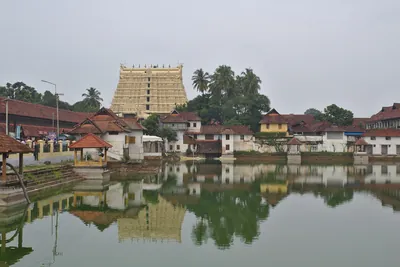
In 2011, on the orders of the Supreme Court, five of the six vaults beneath Sree Padmanabhaswamy Temple in Thiruvananthapuram were opened and inventoried. What came out changed the entire conversation about temple wealth in India.
The inventory recorded sacks of gold coins, Roman-era currency, gold idols, an eighteen-foot gold chain, antique silver, emeralds and diamonds. Valuations reported at the time ran upward of ₹1.2 lakh crore — and those valuations counted metal and stones, not antiquity. Several observers noted that the historical value of the objects, properly assessed, would exceed the bullion value by a wide margin.
Three things make this different from Tirupati's wealth:
- It is not liquid and is not intended to be. The treasure belongs to the deity. It is not deposited, not invested, and not generating anything.
- It accumulated over centuries of royal offering, largely from the Travancore royal house, rather than from present-day donations.
- One vault has never been opened. Vault B, the Bharatakkon Kallara, remained sealed through the entire process, and the 2020 Supreme Court verdict restored control of temple administration to the royal trust.
Because Vault B is unopened, the honest position is that nobody knows the total. Every figure quoted for Padmanabhaswamy is a valuation of five vaults out of six. For the full account of the inventory and the legal history, see our detailed piece on why Padmanabhaswamy is the world's richest temple.
The next tier, and what it tells you
The drop after the top two is severe. Tirupati and Padmanabhaswamy are measured in lakhs of crores; everything else is measured in thousands of crores, a difference of roughly two orders of magnitude.
- Shirdi Sai Baba is the largest of the rest, with assets reported at ₹2,500 to 3,000 crore and annual income of ₹400 to 700 crore. Its wealth is almost entirely modern, built from cash and gold offerings within living memory.
- Vaishno Devi reported income of ₹683 crore in FY 2023-24, of which roughly ₹255 crore was offerings and donations. The rest comes from accommodation, helicopter services and pilgrimage operations — the most diversified revenue base on this list.
- Guruvayur, in Thrissur district, holds ₹1,700 to 2,500 crore in assets on ₹250 to 400 crore of annual income, making it the second-wealthiest temple in Kerala after Padmanabhaswamy. It appears on our guide to famous temples in Kerala.
- Siddhivinayak in Mumbai is the smallest of the six by assets but among the densest by footfall, drawing very large offerings from a single city.
Why every figure on this page is softer than it looks
Anyone quoting temple wealth to two decimal places is guessing. Four reasons to treat all of these numbers as indicative:
- Disclosure is inconsistent. Tirupati publishes a white paper. Most temples publish nothing comparable, and Padmanabhaswamy's annual donations are not officially disclosed at all.
- Valuations move with the gold price. A hoard that is mostly bullion is worth materially more or less depending on the month it was valued in.
- Antiquity is usually excluded. The Padmanabhaswamy inventory valued objects largely by metal content. Their value as historical artefacts is a different and much larger number that nobody has produced.
- Land is hard to value. A large share of Tirupati's reported assets is real estate, whose book value and market value can diverge enormously.
The rankings are robust. The precise crore figures are not, and anyone presenting them as audited fact is overstating what is actually known.
What any of this means if you are actually visiting
Very little, which is itself worth saying, because the wealth stories set expectations that the temples do not meet.
- You will not see the treasure. The Padmanabhaswamy vaults are not open to visitors and never have been. Nothing from the inventory is on display.
- Darshan is free at Padmanabhaswamy. General darshan costs nothing; paid special entry is a separate and modest option. Our tickets page has the current arrangement, and there is no online booking portal.
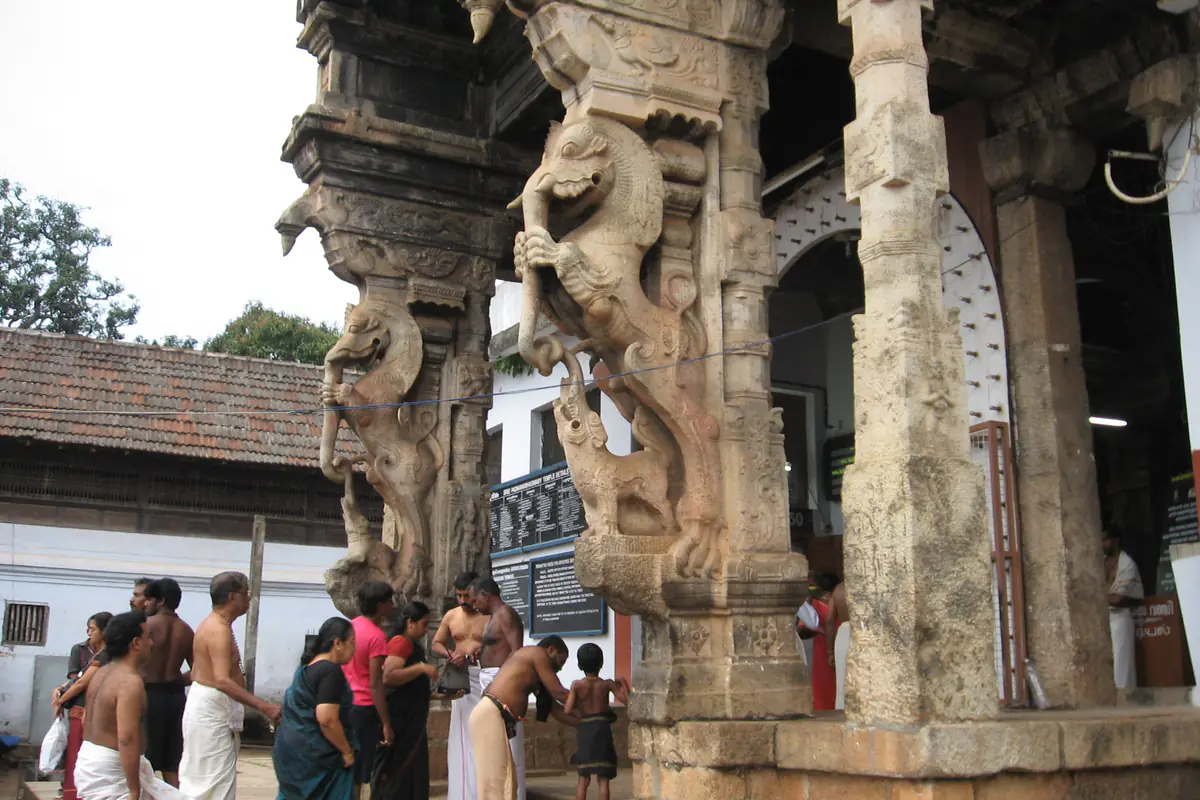
- Wealth buys no comfort. The richest temple in the world by treasure still requires a mundu, refuses trousers at the gate, shuts its sanctum for five hours a day and admits Hindus only.
- Phones and cameras go into a cloakroom at both Tirumala and Padmanabhaswamy, so there are no photographs from inside either sanctum.
If Padmanabhaswamy is on your route, start with the first-time visitor guide, and check the timings and dress code before you travel. They are the two things that actually decide whether you get in.
Key points to remember
- By trust assets and annual income, Tirumala Tirupati is the richest temple in India and the world.
- By accumulated treasure, Sree Padmanabhaswamy holds the largest hoard ever inventoried at a religious site.
- Tirupati's assets are reported at around ₹2.26 lakh crore with annual revenue above ₹5,100 crore.
- Padmanabhaswamy's five opened vaults were valued upward of ₹1.2 lakh crore; the sixth has never been opened.
- Tirupati's wealth is banked and invested. Padmanabhaswamy's is held, unvalued in part, and generates nothing.
- The next tier — Shirdi, Vaishno Devi, Guruvayur, Siddhivinayak — is roughly two orders of magnitude smaller.
- Every published figure is soft: disclosure is inconsistent, gold prices move, antiquity is excluded and land is hard to value.
- None of the treasure is visible to visitors, and general darshan at Padmanabhaswamy is free.
India's richest temples, answered
Ten questions on the rankings, the figures and what is actually known.
Which is the richest temple in India?
It depends on the measure. By trust assets and annual income, Tirumala Tirupati, with assets reported around ₹2.26 lakh crore and revenue above ₹5,100 crore a year. By accumulated treasure, Sree Padmanabhaswamy in Thiruvananthapuram, where five of six vaults were valued upward of ₹1.2 lakh crore.
Is Padmanabhaswamy richer than Tirupati?
Not on a like-for-like basis. Tirupati has larger reported assets and vastly larger annual income. Padmanabhaswamy holds more accumulated treasure in physical objects. Tirupati's wealth is banked and invested; Padmanabhaswamy's sits in vaults and generates nothing. And with one vault unopened, Padmanabhaswamy's true total is unknown.
How much gold is in Padmanabhaswamy Temple?
No complete figure exists. The 2011 inventory covered five of six vaults and recorded sacks of gold coins, gold idols, an eighteen-foot gold chain, antique silver, emeralds and diamonds, with reported valuations upward of ₹1.2 lakh crore. Vault B has never been opened, so any stated total is an estimate of part of the holding.
What is Tirupati temple's annual income?
Over ₹5,100 crore in annual revenue, of which roughly ₹1,500 crore comes from donations and hundi offerings. The rest comes from services, prasadam, accommodation and returns on deposits. Tirumala Tirupati Devasthanams is one of the few temple trusts in India that publishes comparable figures.
Which is the richest temple in Kerala?
Sree Padmanabhaswamy in Thiruvananthapuram, by an enormous margin, on the strength of its vault treasure. Guruvayur is second, with assets reported at ₹1,700 to 2,500 crore and annual income of ₹250 to 400 crore.
Why has Vault B never been opened?
The chamber known as the Bharatakkon Kallara was left sealed through the court-supervised inventory of 2011, and the 2020 Supreme Court verdict restored control of temple administration to the royal trust. Its contents remain uncatalogued, which is why no complete valuation of the temple's treasure exists.
Are these wealth figures reliable?
The rankings are robust; the precise numbers are not. Disclosure varies enormously between trusts, bullion valuations move with the gold price, historical and artistic value is usually excluded entirely, and land holdings are hard to value. Treat every crore figure as indicative rather than audited.
Can visitors see the treasure at Padmanabhaswamy?
No. The vaults are not open to visitors and never have been, and nothing from the 2011 inventory is on display. Phones and cameras are deposited in a cloakroom before entry, so there is no photography inside the temple either.
Is darshan expensive at the richest temples?
No. General darshan at Padmanabhaswamy is free, with a modest paid special entry as a separate option, and there is no online booking portal. Temple wealth comes from voluntary offerings and endowments rather than from charging for access.
Which temples are missing from this ranking?
The Golden Temple in Amritsar, Kashi Vishwanath, Jagannath Puri, Somnath, Meenakshi Amman, Mahakaleshwar and the Ram Mandir at Ayodhya are all very large institutions that appear on most such lists without reliable public figures attached. Their absence reflects the state of disclosure rather than their actual scale.