Inside the temple, and why no photographs of it exist
Search for photographs of the inside of this temple and you get paintings, artists' impressions and nineteenth-century engravings. That is not an accident of the internet. Cameras and phones are deposited at the cloakroom before anybody enters, there is no permit that changes it, and no modern photograph of the sanctum exists in public circulation. So here is the next best thing: a walkthrough of exactly what you see, in the order you see it, from the tank outside to the third door.
The short answer
There are no modern photographs of the inside of Padmanabhaswamy Temple because phones and cameras are deposited at the cloakroom before entry and no permit allows photography of the sanctum. Every image you find is a painting, an artist's rendering or a historical engraving. What you see inside, in order, is: the seven-storey gopuram, the pillared granite corridor, the single-slab Ottakkal Mandapam, and then the three doors framing the head, navel and feet of the reclining deity, lit only by oil lamps.
Why no photographs of the interior exist
The rule is absolute and it is enforced at the entrance rather than inside. Phones, cameras, smartwatches and bags are handed over at the cloakroom before you pass the checkpoint, so the question of photographing the sanctum never arises: the device is not with you.
Three consequences follow, and they explain almost everything odd about searching for images of this temple.
- Every image of the deity is an artwork. Paintings, calendar art and line drawings, none of them photographs.
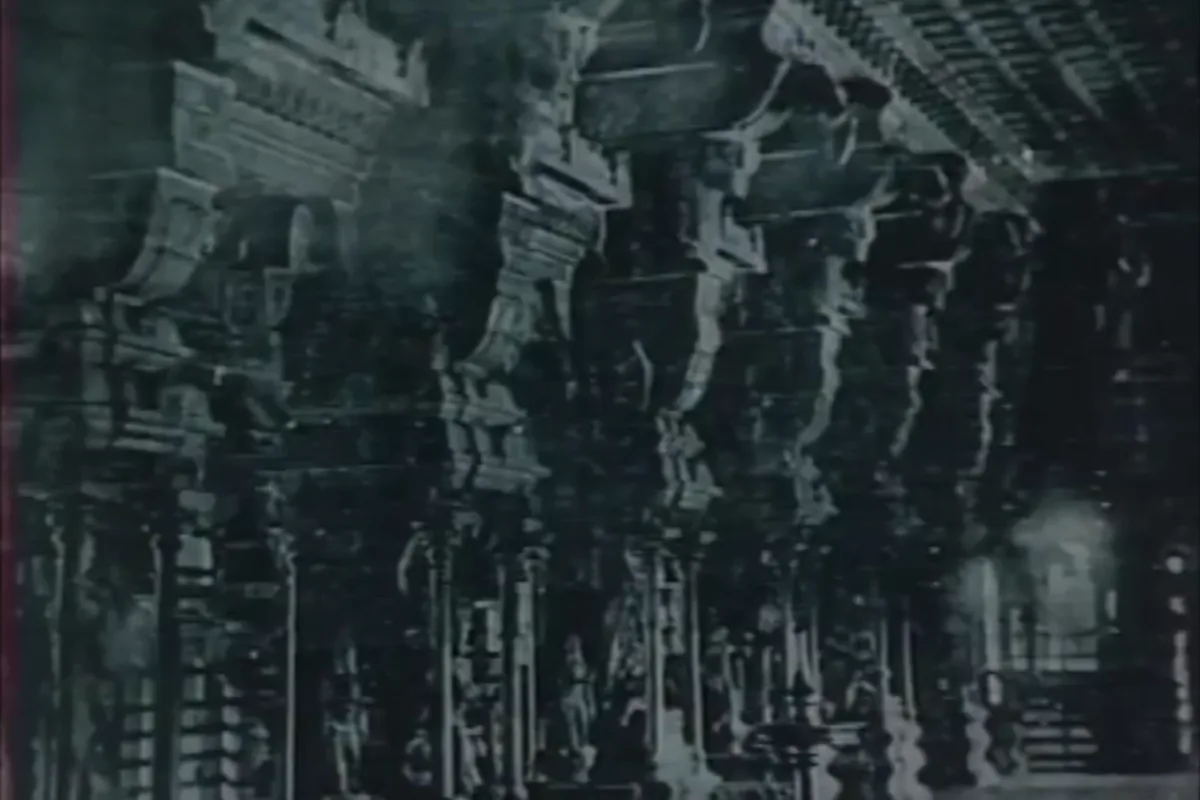
- Interior images are historical. Engravings and illustrations from published nineteenth-century accounts, made before the modern rule and by draughtsmen rather than cameras.
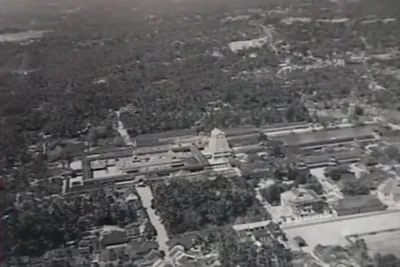
- Exterior photographs are plentiful, because everything outside the checkpoint is unrestricted.
If a site offers you a photograph of the idol, it is showing you a painting. The full list of what is and is not permitted is on our temple rules page.
The tank and the gopuram
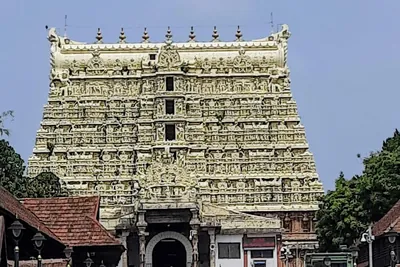
The visit properly begins at the Padma Theertham, the temple tank outside the gate. This is where the photograph everybody recognises is taken: the seven-storey gopuram reflected in still water, with the stepped ghats framing it.
Take it now. Once you pass the checkpoint your camera is in a cloakroom and you will not get another chance, and the tank is outside the restricted area so anybody can be there, including visitors who cannot enter the temple.
The gopuram itself rises to roughly a hundred feet over the eastern gate. It is Dravidian, borrowed from the Tamil tradition and unique at this scale in Kerala, and it was added during the eighteenth-century expansion under Marthanda Varma. The tiered figures on its face repay a proper look, which is easier from across the tank than from directly beneath it.
Early morning light and the hour after sunset are both good. During Lakshadeepam the tower is lit by oil lamps rather than floodlights, which is the version of this photograph everybody wants.
The pillared corridor
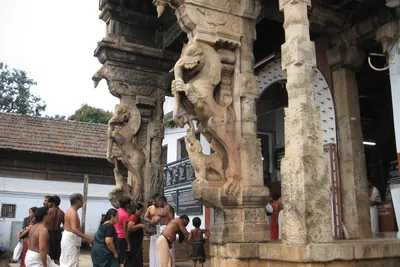
Past the checkpoint, the cloakroom and the dress check, the first thing that registers is the corridor. Several hundred granite columns run around the inner precinct, carrying carved detail on the capitals and shafts, and you walk their length rather than glimpsing them.
The scale takes a moment to land because there is no vantage point that shows you the whole of it. You experience it as a sequence, which is a recurring feature of this building.
Look at the capitals rather than the shafts. The carving concentrates at the top and, in a slow-moving queue, the tops of the columns are what you can actually study. Sculptural figures including yalis, the composite lion creatures of south Indian temple art, appear through the complex.
The stone matters here. Kerala builds in laterite and timber; this was raised in granite between 1729 and 1733 as a deliberate statement of permanence, which our architecture page takes apart in detail.
The Ottakkal Mandapam, cut from one stone
Directly in front of the sanctum sits the Ottakkal Mandapam. The name means single-stone hall, and that is literal: the platform is cut from one slab of granite.
It is easy to walk past without registering, because it reads as a floor rather than a monument. Knowing that it is a single piece changes how it looks entirely, and it is worth the two seconds it costs you to notice.
Rituals performed on behalf of individual devotees take place on it, including the ceremonial weighing rituals historically undertaken by the Travancore rulers, in which a donor was weighed against gold or other valuables that then went to the deity. That practice is one of the streams that filled the cellars beneath the floor.
The mandapam is roped off from the general queue. You pass its edge rather than crossing it, and you should not touch it.
The three doors, in the order you meet them
This is what you came for, and it is over faster than you expect. The sanctum is fronted by three separate openings rather than one arch, each framing a different section of the eighteen-foot reclining figure.
- First door: the head and upper chest, with the five hoods of the serpent Anantha raised behind, and the right hand extending down over a Shiva lingam.
- Second door: the middle of the body, where a lotus rises from the navel with four-faced Brahma seated on it. This is the image the temple's name refers to.
- Third door: the feet, with Sridevi and Bhudevi in attendance, and the sages Bhrigu and Markandeya.
You get seconds at each, not minutes, and the queue does not pause. The single most useful thing you can do is decide in advance what you are looking for at each door, because trying to take in everything at the first one is how most people end up seeing very little. The idol itself, its construction from 12,008 salagramams and the reasoning behind the three doors are covered on our idol page.
The light, and how to actually see anything
The sanctum is lit by oil lamps. There is no electric lighting on the deity, and the level is far lower than any photograph or painting suggests.
This causes a specific, avoidable problem: visitors walk in from bright daylight, reach the first door within a minute or two, and their eyes have not adjusted. They see a shape. Then they are past.
Two things help.
- Do not look at bright surfaces on the way in. Keep your eyes on the floor and the shaded parts of the corridor rather than at daylight through openings.
- Choose an early or late slot. Arriving at 3:30 AM for Nirmalya Darshanam or in the evening means you are coming from low light already, and the lamps read completely differently.
This is the strongest practical argument for the early slot, ahead of any of the usual ones about crowds.
Where you can actually take pictures
Everything outside the entry checkpoint is fair game. Everything inside is not, without exception.
Where you can photograph:
- The Padma Theertham tank and the gopuram reflected in it, which is the definitive shot.
- The outer walls and approach from the East Fort streets.
- The Aarat procession during Painkuni or Alpashy, which travels public streets to Shanghumugham beach.
- The Lakshadeepam exterior when the lamps are lit.
A camera permit exists for parts of the complex in certain circumstances, but nothing permits photography of the sanctum or the deity. Do not attempt to shoot from the boundary either; it is not appreciated and it is the kind of thing that gets a visitor removed.
The images that do exist, and what they are
Given no photographs, it is worth knowing what the circulating images actually are, so you can judge what you are looking at.
- Devotional paintings of the deity. The most reproduced images of the Ananthashayanam form. They are interpretations following iconographic convention, not records of the specific idol.
- Nineteenth-century engravings and illustrations, from published travel and survey accounts of the period. These predate the modern restriction and are the closest thing to a documentary interior view. The image at the top of this page is one of them.
- Exterior photography, plentiful and genuine, covering the gopuram, the tank, the walls and the processions.
- Modern digital renderings, increasingly common and often presented without qualification. Treat any photorealistic interior image with suspicion.
The practical conclusion is the one this whole page has been building to: this is a temple you have to go and see. Photography has been substituting for presence at monuments for a century, and here it simply cannot.
The whole route, end to end
Put together, a first visit runs like this, and knowing the shape of it means you spend your attention on the building rather than on wondering what happens next.
- The tank. Padma Theertham, outside the checkpoint. Photograph the gopuram here. This is the only camera opportunity you will get.
- The dress check. Clothing is inspected before anything else and the decision is final.
- The cloakroom. Phone, camera, bag and footwear handed over. Keep cash on you.
- The eastern entrance, under the seven-storey gopuram, which you pass beneath rather than look at.
- The corridor. Several hundred carved granite columns, walked at queue pace. Look at the capitals.
- The Ottakkal Mandapam, the single-slab hall, passed at its edge.
- The three doors, a few seconds each: head and lingam, navel and Brahma, feet and the goddesses.
- Out, and back to the cloakroom to collect everything.
Forty minutes to ninety, depending on the slot and the day. The first-time visitor guide plans the hours around it, including the five-hour midday closure.
Key points to remember
- No modern photographs of the interior exist. Phones and cameras are deposited at the cloakroom before entry.
- Every image of the deity in circulation is a painting, a historical engraving or a digital rendering.
- Take the gopuram-and-tank photograph before you enter. It is the definitive shot and it is outside the checkpoint.
- Inside, in order: the pillared granite corridor, the single-slab Ottakkal Mandapam, then the three sanctum doors.
- The three doors frame the head with the Shiva lingam, the navel with Brahma, and the feet with Sridevi and Bhudevi.
- The sanctum is lit by oil lamps only. Let your eyes adjust on the way in or you will see almost nothing.
- An early or evening slot means you arrive already adapted to low light, which is the best reason to choose one.
Inside the temple, answered
Ten questions on photography, what is visible inside and what the circulating images actually are.
Why are there no photos of the inside of Padmanabhaswamy Temple?
Because cameras never get inside. Phones, cameras and smartwatches are deposited at the cloakroom before you pass the entry checkpoint, and no permit allows photography of the sanctum. Every image of the interior in circulation is a painting, a historical engraving or a digital rendering.
What do you actually see inside Padmanabhaswamy Temple?
In order: the pillared granite corridor of several hundred carved columns, the Ottakkal Mandapam cut from a single slab of granite in front of the sanctum, and then the three doors framing the head, the navel and the feet of the eighteen-foot reclining deity, lit only by oil lamps.
Can I take photos at Padmanabhaswamy Temple at all?
Yes, outside the entry checkpoint. The Padma Theertham tank with the gopuram reflected in it, the outer walls, the Aarat procession on public streets during a festival, and the Lakshadeepam exterior are all unrestricted. Nothing inside is.
What is the best photograph to take at the temple?
The seven-storey gopuram reflected in the Padma Theertham tank, taken from the ghats outside the entry checkpoint. Early morning and the hour after sunset both work. Take it before you go in, because your camera goes to the cloakroom immediately afterwards.
Are the photos of the idol I see online real?
No. They are paintings, calendar art or digital renderings following iconographic convention. No photograph of the deity exists in public circulation, because no camera has been permitted in the sanctum in the modern era.
What is the Ottakkal Mandapam?
A hall cut from one single slab of granite, laid directly in front of the sanctum. Rituals performed on behalf of devotees take place on it, including the ceremonial weighing rituals of the Travancore rulers. It is roped off, so visitors pass its edge rather than crossing it.
How dark is it inside the sanctum?
Considerably darker than photographs and paintings suggest. There is no electric lighting on the deity, only oil lamps. Visitors coming in from bright daylight often reach the first door before their eyes have adjusted and see very little as a result.
How long do you get in front of the deity?
Seconds at each of the three doors, not minutes. The queue keeps moving and does not pause for individuals. Decide in advance what you want to look at through each door rather than trying to take in everything at the first one.
Is there a camera permit at the temple?
A camera permit exists for parts of the complex in certain circumstances, but nothing permits photography of the sanctum or the deity, and personal devices are deposited at the cloakroom regardless. Do not attempt to photograph from the boundary either.
What are the old illustrations of the temple interior?
Engravings and illustrations from published nineteenth-century travel and survey accounts, made by draughtsmen before the modern restriction. They are the closest thing to a documentary record of the interior that exists, and they are in the public domain.