Why Padmanabhaswamy is called the world's richest temple
In 2011 a court order forced open the cellars beneath the sanctum of a temple that had never advertised what it held. Five of six vaults were inventoried. What came out of them made Sree Padmanabhaswamy the richest single place of worship ever recorded, and the sixth vault has still not been opened. This is what was found, what it is worth, who it belongs to and why almost none of it can ever be sold.
The short answer
Padmanabhaswamy Temple is called the world's richest because a Supreme Court-ordered inventory in 2011 opened five of the six cellars under the temple and catalogued gold, diamonds, emeralds, ancient coins and ceremonial objects widely reported at over ₹1 lakh crore, or roughly twenty billion US dollars at the valuations then circulating. Vault B has never been opened. Crucially, none of this is temple income or a bank balance. It is consecrated property that cannot be sold, and it is not visible to visitors.
How the cellars came to be opened at all
For most of its modern history the temple's wealth was an open secret in Thiruvananthapuram and nothing more. The cellars sat under the granite floor, sealed, managed by a trust connected to the former Travancore royal family, and nobody outside that circle had a verified account of the contents.
That ended with litigation. A petition raised concerns about the security and management of the temple's assets, and in 2011 the Supreme Court of India ordered an inventory. A seven-member observation committee was appointed to open the vaults, catalogue what was inside and report back.
Six cellars were identified and labelled A to F. Five were opened. The committee documented the contents item by item under court supervision, and although the full report was not published for public consumption, enough entered the record through court filings and reporting to establish the scale.
The one that was not opened was Vault B, and the reasons given for leaving it shut have been argued in court ever since. That single unopened door is the reason this story has never really finished.
What was actually catalogued
The contents were not bullion in the modern sense. They were accumulated offerings, ceremonial objects and coinage, deposited over centuries and simply left where they were put.
- Gold coins in very large numbers, including coinage that reporting traced to the Roman trade with the Malabar coast and to the Napoleonic era, which speaks to how long the deposits had been accumulating.
- A gold chain reported at around eighteen feet, along with gold sheaves, gold ropes and ceremonial gold vessels.
- Sacks of diamonds, and quantities of emeralds, rubies and other precious stones, many still loose rather than set.
- Golden idols and ceremonial thrones, some described in reporting as centuries old, together with crowns and ornaments used to dress the deity.
Vault A held the bulk of what was found. The other opened cellars contained ritual items, older deposits and material connected to the temple's working ceremonial life rather than stored wealth.
The character of the collection matters. This is not a treasury built by a king to fund a state. It is the residue of donation, most of it given directly to the deity, some of it as part of the ceremonial weighing rituals that took place on the Ottakkal Mandapam in front of the sanctum.
Where the lakh crore figure comes from, and its limits
The figures that circulated after 2011 ranged widely. The most repeated were ₹1 lakh crore and above, translated in international coverage as roughly twenty to twenty-two billion US dollars. Some later estimates ran considerably higher.
Treat all of them with care, for three reasons.
- They are mostly metal-weight valuations. Gold priced by weight ignores that a great deal of this material is of far greater historical and artistic value than its melt price.
- Vault B is not in the count. Every published figure describes only what was opened, so the true total is unknown by definition.
- Gold prices have moved substantially since 2011, which alone would change any weight-based total.
What is not in dispute is the ranking. No other single place of worship has ever had a comparable holding documented under judicial supervision. Tirupati, frequently named as the wealthiest temple by annual income, operates on a completely different basis: it receives enormous ongoing donations and runs them as a working endowment. Padmanabhaswamy's position rests on a static, historic accumulation.
The vault nobody has opened
Vault B, called Kallara B, has not been inventoried. The objections raised against opening it fall into two categories, and they are not the same kind of argument.
The ritual objection is that the chamber is sacred in itself, that its door carries protective iconography, and that opening it would violate a sanctity the temple's own traditions have maintained for generations. Various accounts describe the door as bearing serpent imagery, and local tradition attaches warnings to disturbing it.
The procedural objection is more mundane and has carried more weight in court: there was no agreed protocol for opening it, no consensus on who had standing to authorise it, and a live dispute over the temple's management running in parallel.
What is inside is genuinely unknown. Claims that it holds several times the value of the opened vaults are speculation, not findings. So are the stories of hidden passages to the sea. The honest position is that a sealed chamber under a temple floor has not been opened, and no one alive has a verified account of its contents. We cover the door, the legal history and the recurring campaigns to open it on the Vault B page.
Where centuries of gold actually came from
Three streams fed the cellars, over a very long period.
Royal donation. In 1750 the Travancore ruler Marthanda Varma performed the Thrippadidanam, surrendering his kingdom to Sree Padmanabhaswamy and ruling thereafter as Padmanabhadasa, the servant of Padmanabha. In legal and ritual terms the deity became the sovereign and the king the administrator. Everything the state accumulated from that point was, in a real sense, being held on behalf of the temple. This is the single largest factor and it is covered on the temple history page.
Trade. The Malabar coast traded pepper, spices and timber with the Roman world, the Arab world and later the European powers for well over a thousand years. Coinage from those exchanges ended up in the vaults, which is why Roman-era gold appears in a Kerala temple cellar.
Devotee offering. Centuries of individual donations, including ceremonial weighing rituals in which a donor was weighed against gold or other valuables, all of which went to the deity.
Nothing was ever drawn down. That is the actual explanation for the scale: a very wealthy state treated a temple as its sovereign for two hundred years, and the deposits were never spent.
Who owns the treasure today
The legal answer is the one that surprises people: the deity owns it. Under Indian law a consecrated Hindu deity is a juristic person capable of holding property, and the treasure belongs to Sree Padmanabhaswamy, not to a family, a trust or the state.
What was disputed was who manages that property. The Kerala High Court had ruled against the former royal family's claim to control the temple's administration. In July 2020 the Supreme Court set that aside, upholding the family's shebait rights, meaning their right to manage the temple as the deity's servants rather than to own its assets. Administration operates through a committee arrangement under judicial oversight.
The distinction is not academic. Shebait rights are duties of custodianship. They carry no right of sale, no right of personal enjoyment and no beneficial interest in the property itself.
For a visitor this changes nothing practical. General darshan remains free, the counters remain cash-only, and none of the treasure is displayed.
Why none of it can simply be sold
Every few years someone proposes that the treasure be liquidated for public benefit. It never happens, and the reasons are structural rather than sentimental.
- It is consecrated property. Objects offered to a deity are not disposable assets in Hindu law. They are the deity's, and the administrators are custodians with duties, not owners with discretion.
- Much of it is antiquity. Roman coinage and centuries-old ceremonial gold fall within India's heritage protections, which restrict export and sale regardless of who holds them.
- The valuation is theoretical. Selling at scale would collapse the price of exactly the things being sold, so the headline figure is not a realisable sum.
- Judicial oversight. Nothing moves without court sanction, and no court has shown any appetite for authorising a sale.
So the practical position is that the world's richest temple holds wealth it cannot use. The temple's operating costs are met from ordinary donation, ritual fees and the state's temple administration framework, exactly as they would be at a temple with empty cellars.
What you can actually see of it
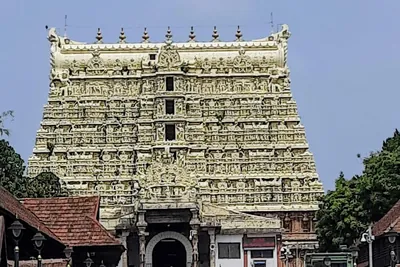
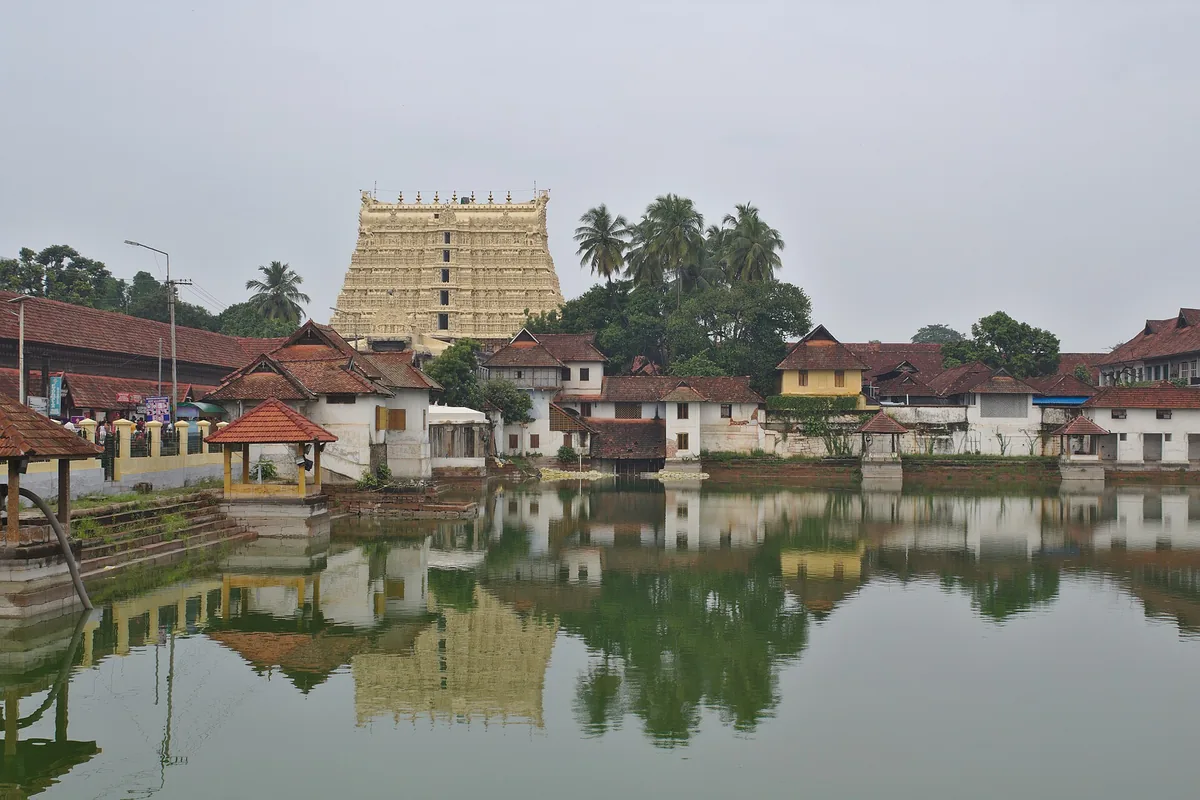
Set expectations honestly before you travel. The vaults are not on any public route. They lie beneath the floor of the temple, there is no viewing gallery, no museum display of the inventory, and no tour that goes near them. A visitor sees the granite complex above and nothing below it.
What you can see is the tradition that produced the wealth. On festival days the deity is dressed in a gold anki and richer ornaments, and that is the closest a visitor gets to the collection. The two ten-day Utsavams, Painkuni in March or April and Alpashy in October or November, are the reliable windows.
If the history is what draws you, spend an hour at the Kuthiramalika Palace Museum beside the temple, which holds Travancore royal collections and is open to everybody regardless of faith. The Napier Museum a short drive away covers the wider regional material. Both are on our places to visit guide.
Note also that entry to the temple itself is restricted to Hindus, and the dress code is enforced at the gate. If you are planning around the treasure story, read the entry rule first.
Key points to remember
- A Supreme Court-ordered inventory in 2011 opened five of six cellars beneath the temple.
- Reported values exceeded ₹1 lakh crore, roughly twenty billion US dollars at the valuations then circulating.
- Vault B has never been opened, so every published total describes an incomplete count.
- The wealth came from royal donation after the 1750 Thrippadidanam, centuries of coastal trade, and devotee offerings.
- In law the deity owns the treasure; the Supreme Court upheld the former royal family's management rights in July 2020.
- None of it can be sold: it is consecrated property, much of it protected antiquity, and the valuation is not realisable.
- There is no public access to the vaults. Visitors see the temple above and nothing of the cellars below.
The temple treasure, answered
Ten questions about the vaults, the valuation, the ownership and what a visitor can actually see.
How much is the Padmanabhaswamy Temple treasure worth?
Reporting after the 2011 inventory put the value of the five opened vaults at over ₹1 lakh crore, translated internationally as roughly twenty to twenty-two billion US dollars. Those figures are weight-based estimates and exclude Vault B entirely, which has never been opened, so the true total is unknown.
Is Padmanabhaswamy really the richest temple in the world?
By documented holdings, yes. No other single place of worship has had a comparable treasure catalogued under judicial supervision. Tirupati is often called the richest by annual income, which is a different measure: it receives very large ongoing donations, while Padmanabhaswamy's position rests on a static historic accumulation.
What was found inside the vaults?
Gold coins in very large numbers, including Roman-era and Napoleonic-era coinage, a gold chain reported at around eighteen feet, gold sheaves and vessels, sacks of loose diamonds, emeralds and rubies, and golden idols, crowns and ceremonial thrones. Vault A held the bulk of it.
Why has Vault B never been opened?
Two objections have been raised. The ritual objection is that the chamber is sacred in itself and that opening it would violate a sanctity the temple has maintained for generations. The procedural objection, which has carried more weight in court, is that no agreed protocol or standing to authorise the opening was ever settled while a management dispute ran in parallel.
Who owns the Padmanabhaswamy treasure?
In law the deity owns it. A consecrated Hindu deity is a juristic person capable of holding property. In July 2020 the Supreme Court upheld the former Travancore royal family's shebait rights, meaning their right to manage the temple as the deity's servants, which carries duties of custodianship rather than any right of ownership or sale.
Can the treasure be sold or used for public welfare?
No. It is consecrated property that administrators hold as custodians rather than owners, much of it falls under India's antiquity protections, nothing can move without court sanction, and the headline valuation is not a realisable sum because selling at that scale would collapse the price.
Where did all the gold come from?
Three sources. Royal donation, above all after Marthanda Varma surrendered his kingdom to the deity in 1750 and ruled as Padmanabhadasa. Centuries of Malabar coast trade with the Roman, Arab and European worlds. And continuous devotee offerings, including ceremonial weighing rituals. Nothing was ever drawn down.
Can visitors see the treasure or the vaults?
No. The cellars lie beneath the temple floor, there is no viewing gallery, no museum display of the inventory and no tour that goes near them. The closest a visitor gets is the deity dressed in a gold anki on festival days.
Does the temple use the treasure to fund itself?
No. Operating costs are met from ordinary donation, ritual fees and the state's temple administration framework, exactly as at any other temple. General darshan remains free and the counters are cash-only.
Are the stories about a curse on Vault B true?
They are folklore rather than findings. Local tradition attaches warnings to disturbing the chamber and accounts describe serpent imagery on the door, but no verified account of the contents exists and claims about hidden passages or specific valuations are speculation.